
Homoepathy was discovered by a German Physician, Dr. Christian Friedrich Samuel Hahnemann (1755-1843), In the late eighteen century. It is a therapetic systemof medicine premised on the principle,"Similia Similibus Curentur" or 'let likes be treated by likes'. It is a method of treatment for curring the patient by medicines that posses the power of producing similar symptoms in a human being simulating the natural disease, which it can cure in the diseased person, It treates the patients not only through holistic approach but also considers individuaistic characteristics of the person. This concepts of 'Law of Similars' was also enuncaited by Hippocrates and Paracelsus, but Dr. Hahnemann established it on a scientific footing despite the fact that he lived in an age when modern laboratory methods were almost unknown.


- Introduction
- About Us
- Infrastructure
- Staff Members
- Services
- Research Studies
- Publication
- Future Vision
- Committees
|
a) About the Institute
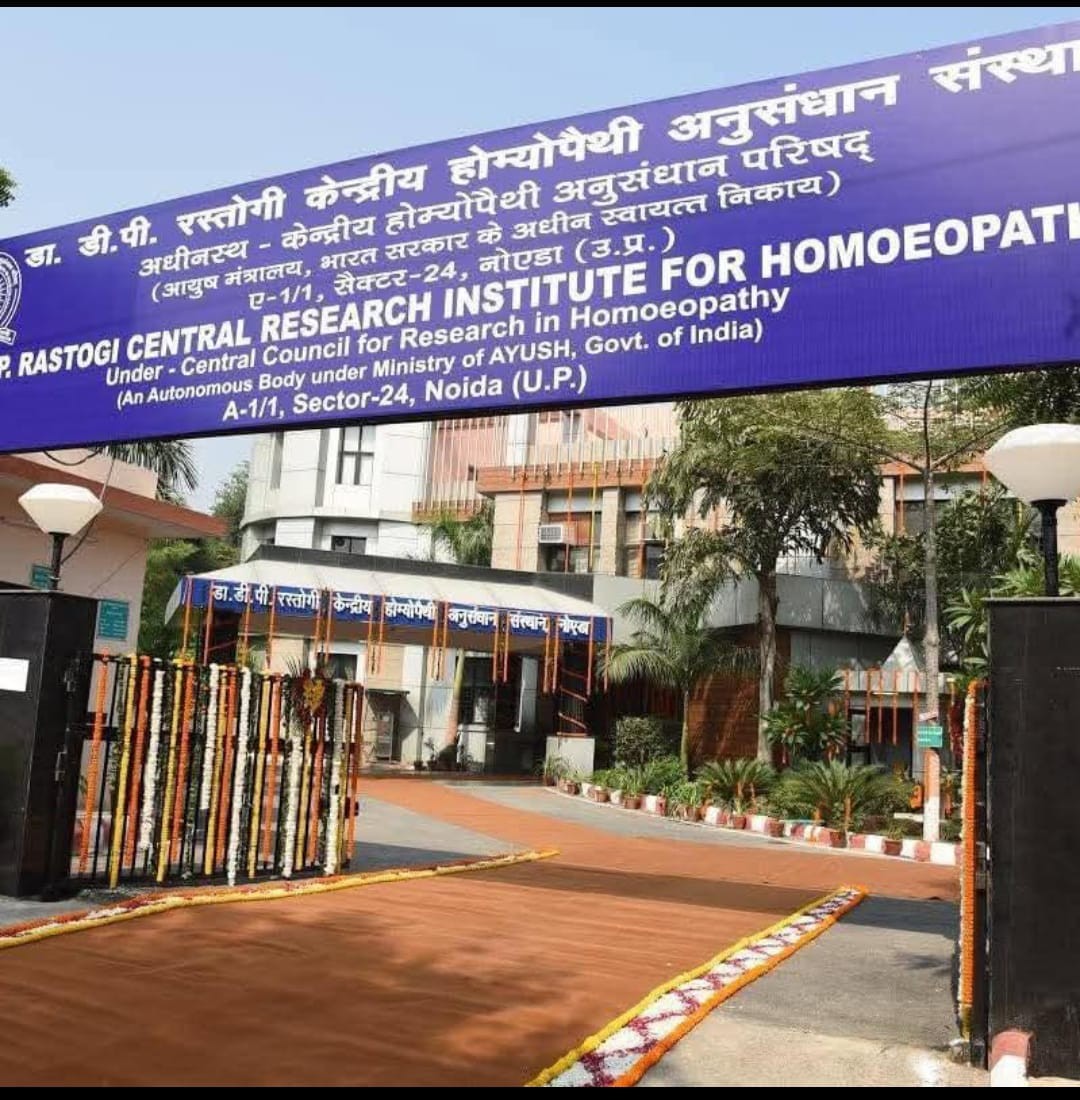
Central Research Institute of Homoeopathy located at A-1/1, Sector 24, NOIDA, Uttar Pradesh is one of the premier research institutes of Central Council for Research in Homoeopathy, New Delhi under Ministry of AYUSH, Govt. of India, came into existence w.e.f 1st May, 2007.
It was named as Dr. D.P. Rastogi Central Research Institute of Homoeopathy on 7 th October 2015 and officially inaugurated by Shri Shripad Naik, Hon’ble Minister of State (Independent charge), Ministry of AYUSH, Govt. of India.
Late Dr. D.P. Rastogi (1939-2010) was the Director of Central Council for Research in Homoeopathy, New Delhi from 1984-1999. His major contribution in the field of Homoeopathy started with the Formulation of Homoeopathic Central Council Act in 1973. He introduced Homoeopathy in Drug and Cosmetic Act and took initiatives for publication of Homoeopathic Pharmacopoeia of India. He was a passionate teacher, author, physician and researcher. He is also known as the Ambassador for Indian Homoeopathy and has been honoured with numerous awards, to name a few:
- The Hahnemann Award in 1995
- Dhanwantri Award in 1997
- Hahnemann Memorial Award in 2002
- The Lifetime Achievement Award in 2008
The institute has been established with its focus on research and engaged for overall development and promotion of Homoeopathic system of medicine through scientific research. There is a full-fledged hospital set up including OPD, IPD, Laboratory facilities along with specialty clinics viz. ENT, Ophthalmology, Lifestyle Disorders, General, Dermatology, Pain, Infertility, Gynaecology, Paediatrics, Geriatric, Male Complaints OPD and Physiotherapy running successfully within the institute. Apart from catering to the needs of the patients, the institute carries out research in the field of Drug Standardisation, Drug Proving, Clinical Verification, Clinical Research and public health initiatives.
The institute endeavours to keep pace with the time and conduct research on the scientific parameters without deviating from the principles of homoeopathy, so that the results of these scientific studies may be used not only by the homoeopathic fraternity but the scientific world for the betterment of mankind as well. Apart from the primary focus, the institute is also developing Resource Centre of Information on Homoeopathy.
b) Mandate of the Institute
- To explore various homoeopathic research areas involving multi-disciplinary approach in the light of modern scientific parameters.
- To standardize homoeopathic drugs in terms of their pharmacognostical, physico-chemical and pharmacological profiles for quality control of homoeopathic drugs.
- To prove coded homoeopathic drugs on healthy human beings through double blind technique.
- To clinically verify the pathogenesis of proved/partially proved homoeopathic drugs.
- To work in the field of fundamental, applied and evidence-based research areas to explore the possibilities of solution of problem related to potency and mechanism of action of homoeopathic drugs scientifically.
- To collaborate with other Institutes (Homoeopathic and Allied) for taking up research projects and exchange information with other Institutions of Excellence for promotion of Homoeopathy.
- To propagate research findings and awareness amongst the homeopathic fraternity in particular and masses in general; through books, monographs, journals, newsletter, I.E.C. Material, CME, audio visuals etc. through National Resource Centre, Public Information cell, Arogya melas, Awareness camps etc.
- To make efforts for the capacity building of scientists, Para-medical staff, administrative staff by organizing and participating in the Continuing Medical Education, Workshops and Seminars at national and international level.
- To provide effective and free health care services to the needy at grass root level through its regular OPDs, IPDs and health camps
Staff Members
List of Regular Staff
|
S.No. |
Name |
Designation |
|
1 |
Dr. Shaji Kumar R.T. |
AD(H)/Officer In-charge |
|
2 |
Dr. Padmalaya Rath |
RO(H), S-4, Hospital In-charge |
|
3 |
Dr. Kumar Vivekanand |
RO(H), S‐4 (Posted at BIS) |
|
4 |
Dr. Sonia Raizada |
RO(H), S-2 |
|
5 |
Dr. Meetu Geol |
RO(H), S-2 (Posted at Min.of Ayush) |
|
6 |
Dr. Punam Kumari |
RO(H), S-2 |
|
7 |
Dr. Swapnil Kamble |
RO(H), S-2 |
|
8 |
Dr. Satvinder Singh |
RO (Bio. Chem.), S-1 |
|
9 |
Dr. Karanpreet Nahar |
RO(H), S-1 |
|
10 |
Dr. Harpreet Kaur |
RO(H), S-1 |
|
11 |
Dr. Shweta Gautam |
RO(H), S-1 |
|
12 |
Dr. Pankhuri Mishra |
RO(H), S-1 |
|
13 |
Dr. Swati Pandey |
RO(H), S-1 |
|
14 |
Dr. Jyoti Sachdeva |
RO(H), S-1 |
|
15 |
Dr. Maneet Parewa |
RO(H), S-1 |
|
16 |
Mrs.Nishi Sanoj |
Staff Nurse |
|
17 |
Mrs.Mercy Madhulatha |
Staff Nurse |
|
18 |
Mrs.Rajni Tirkey |
Staff Nurse |
|
19 |
Mrs.Manju Vijesh |
Staff Nurse |
|
20 |
Mrs.Kimneilhing Gangte |
Staff Nurse |
|
21 |
Mrs.Rashmi Jha |
Hindi Asstt. |
|
22 |
Dr. Kirti Singh |
Junior Librarian |
|
23 |
Sh. Anil Kumar |
Pharmacist |
|
24 |
Sh. Gurjeet Singh |
Lab.Tech |
|
25 |
Mrs. Sonia Arora |
Ultrasonography Technician |
|
26 |
Sh. Amit Kumar Sharma |
X‐Ray Tech. |
|
27 |
Sh. Nikhil Tomar |
UDC |
|
28 |
Sh. Kripa Shanker |
UDC |
|
29 |
Sh. Ajay Srivastava |
Phar.Asst. |
|
30 |
Sh. Parun Gautam |
UDC |
|
31 |
Sh. Suresh Kumar |
RCTO |
|
32 |
Sh. Rakesh Kumar |
Plumber |
|
33 |
Sh. Vinod Kumar |
Dark Room Asstt. |
|
34 |
Sh. Arun Kumar |
UDC |
|
35 |
Sh. Nazim Ali |
LDC |
|
36 |
Sh. Virendra Kumar |
Cook |
|
37 |
Sh. Sushil Kumar |
Kitchen Servant |
|
38 |
Sh. Surendra Pratap Singh |
Kitchen Servant |
|
|
DS SECTION |
|
|
39 |
Dr. Pankaj Gupta |
AD (Pharmacology) |
|
40 |
Dr. Binit Dwivedi |
RO(H) S‐4 |
|
41 |
Dr. Satish Patel |
ARo (Pharmacognosy) |
|
42 |
Mrs. Anamika Kotiya |
Pharmacist |
Drug standardization Program
Standardization work of allotted drugs
The drug standardization department was established in 1979 at HPL Ghaziabad and shifted to DDPRCRIH, Noida in the year 2008. DDPRCRI(H) Noida has contributed to laying down the pharmacognostic, physicochemical, and pharmacological standards of homoeopathic drugs from herbal, chemical, and animal sources for manufacturing purposes. The Council has undertaken pharmacognostic studies on 317 drugs, physicochemical studies on 336 drugs, and pharmacological studies on 151 drugs. 149 drugs have been studied in all three aspects. The drug standardization data are provided to the Homoeopathic Pharmacopoeia Committee for inclusion in the Homoeopathic Pharmacopoeia of India, a reference book used by the homoeopathic industry for manufacturing homoeopathic medicines. This department has developed pharmacopoeial standards of pharmacognostical and physico-chemical parameters of 202 drugs. Later on, state of art research labs viz., Pharmacognosy, Physico-Chemical, Pharmacology, Molecular biology, Microbiology, Zebrafish lab, In-house Pharmacy lab, and Animal house as per CPCSEA norms have also been developed with modern Instrumentation facility. Since then, DDPRCRI(H) contributed a lot in different research programs in every area of research be it pharmacognosy, physio-chemical, pharmacology, or microbiology to achieve the mandate.
Existing Infrastructure includes:
- Pharmacognosy laboratory
- Physico-chemical Laboratory
- Pharmacology Laboratory
- Microbiology Laboratory
- Molecular Biology Laboratory
- Zebrafish Laboratory
- In-House Pharmacy
- Animal House
- Raw Drug Museum
- Medicinal Plants Garden
Completed Research projects
- Evaluation of the antifungal activity of certain homoeopathic medicines on the growth of human pathogenic fungi “Candida albicans” using In-vitro assays
- Evaluation of the antifungal activity of certain homoeopathic medicines on the growth of human pathogenic fungi “Microsporum canis” using In-vitro assays.
- Evaluation of the antifungal activity of certain homoeopathic medicines on the growth of human pathogenic fungi “Aspergillus niger” using In-vitro assays
- Screening of antibacterial activity of certain homoeopathic medicines on the growth of human pathogenic Gram negative bacterial strain Escherichia coli using the in-vitro model.
- Screening of antibacterial activity of certain homoeopathic medicines on the growth of human pathogenic Gram negative bacterial strains Klebsiella pneumoniae using in-vitro models
- Screening of antibacterial activity of certain homoeopathic medicines on the growth of human pathogenic Gram negative bacterial strains Proteus mirabilis using in-vitro models
- Comparative Evaluation of Anti-Convulsant Potential of Homeopathic dilutions of Cuprum metallicum Prepared by Two Different Methods of Potentization in Zebrafish
- Study on the Antimicrobial effect of the Homoeopathic Medicinal Plant Fagopyrum Esculentum Moench has been completed
- Assessment of the Biological Effect of Zincum Met New and old Potencies against the Fungal Strain has been completed
- Comparative standardization study of Reserpine in Rauwolfia serpentina homoeopathic Mother Tinctures manufactured by different pharmaceutical industries using HPTLC.
- Estimation of Phytochemical Content, HPTLC Analysis and evaluation of the Antioxidant potential of Coffea cruda, Thuja occidentalis, Pyrusmalus, Hydrastis Canadensis, and Thea chinensis mother tinctures and their dilutions (6C, 12C, 30C and 200C) by Ultraviolet Spectroscopy method.
- Fundamental Homoeopathic Research (Drug Standardization) of Adansonia digitata.
- HPTLC Atlas of Homoeopathic Medicinal Plant Drugs Vol.1
- Collaboration work of H.P.I. and H.P. of the United States
- Preparation of monographs of HPI vol. XI.
- Revision /upgradation of different volumes of Homoeopathic Pharmacopoeia of India (HPI).
- Annual Assignments of each years
- Chemical profiling of exotic plants
- A Pilot Study on Standardization and Authentication of Homoeopathic Drugs by Using Molecular Methods
- In-vitro and In-vivo antifungal activities of selected homoeopathic medicines and their effect on fungal cell wall integrity
- Evaluation of Antinociceptive and anti-inflammatory effects of homoeopathic medicines in adult zebrafish (Danio rerio)
- Evaluation of the Pharmacological effect of homoeopathic drugs in Zebrafish Models”
- Evaluation of safety of homeopathic mother tinctures and their potencies on zebrafish embryonic development”.
- Safety Evaluation of Homeopathic Medicines in Acute Oral and Sub-acute Oral Toxicity Studies.
- Evaluation of the immunomodulatory effect of Homoeopathic medicines on experimental animals.
- Evaluation of Safety of Homoeopathic medicines (Alfa-Alfa, Avena sativa, and Alfa-Avena Bioceutical) in rats.
Ongoing Research Activities
- Physico-Chemical Department
- Annual assignment for the year 2023-24/2026-27
- HPTLC Atlas of Homoeopathic Medicinal Plant Drugs Vol.2
- HPTLC Atlas of Homoeopathic Medicinal Plant Drugs Vol.3
- Revision/ Updation of Drug Standardization Vol.2, 3 and 4.
- Phytochemical Profiling, Detection and Quantification of Marker Compounds in Homoeopathic
- Mother Tinctures using UV-Visible Spectrophotometry and HPTLC Techniques
- BIS project
- Pharmacognosy Department
- Macroscopic and microscopic Image Atlas for Indigenous homoeopathic medicinal plants
- Standardization and Authentication of Homoeopathic Drugs by Using Molecular Methods
- Annual assignment for the year 2023-24/ 2026-27
- Revision/Updation of Drug Standardization Vol.2,3 and 4
- BIS project
- Pharmacology Department
- Pharmacological investigation of selected homoeopathic medicine in complete freund’s adjuvant (CFA) induced arthritis in rats and explore possible mechanistic pathway.
- Investigating the molecular pathways of homoeopathic medicines in zebrafish model of chronic unpredictable stress (CUS).
- Evaluation of the effect of Homoeopathic medicines on Streptozotocin induced diabetes and its complications in experimental animals emphasizing on diabetic nephropathy.
- Evaluation of safety of homeopathic mother tinctures and their potencies in Albino rats.
- Isolation of drug resistance Escherichia coli and ESKAPE pathogens from urine samples and electron-microscopic study to evaluate the effect of homeopathic drugs on bacterial cell morphology.
- Microbial Standardization of Raw Plant Drugs and Finished Products to Enhance the Quality of Homoeopathic Drugs.
To be initiated Research projects
- Evaluation of Cardioprotective Potential of Selected Homoeopathic Preparations Against Drug-Induced Cardiotoxicity Using Integrated Zebrafish and Rodent Models.
- Antimicrobial and Synergistic Potential of Homoeopathic Plant Extracts Against MDR Enteric Pathogens
- Preclinical safety pharmacology studies of Homeopathic Medicines (Lawsonia inermis, Tamarindus indica and Cissus quadrangularis) in rats.
Clinical Research
The Institute conducts advanced clinical research trials across diverse disease conditions. By integrating modern clinical trial methodologies and evidence-based study designs, the Institute generates robust, scientifically validated outcomes without compromising core homoeopathic principles. Insights and findings from these trials are regularly published in reputed peer-reviewed national and international medical journals.
Details of the Institute's ongoing and completed research studies are presented below.
Ongoing Activities
- Urticaria- RCT
- Micro nutrients disorder in school children
- Homoeopathy in COPD
- Stress in continuous of urine in elderly aged ladies
- Scope of Ovarian Cyst in Homoeopathy
- PCOS-Compartive trial
- Hypothyroidism-RCT
- Primary dysmenorrhea-RCT
- Irritable bowel syndrome-RCT
- Acne- RCT
- Anal Fissure-RCT
- Tobacco Reduction/Cessation and Withdrawal
- Impact of Heat Wave
- Prevalence of Vitamin-D deficiency and its management
- Randomized Controlled Trial on Early hemorrhoid disease
- Randomized Controlled Trial on Chronic Suppurative Otitis Media
- Syzygium Jambolanum (DM)-RCT
- Multimorbidity in older adults- RCT
- Homoeopathic medicines prepared by new vis-a-vis old method
- Management of Molluscum Contagiosum with Individualized Homoeopathy
- Rhus toxicodendron of Musculoskeletal Disorders (MSD)
- Abnormal vaginal discharge- Observational study
- LR study of musculo skeletal disorders
- Management of Depression, Anxiety and Stress in patients with non-communicable diseases
- Obesity with Hypothyroidism
- Obesity in Children
- Homoeopathy in Non-Communicable Diseases
To be initiated in 2026
- Allergic Rhinitis- Gene Expression Study
- Stage-I Hypertension-RCT
- Osteoarthritis-RCT
- Diabetes- RCT
- Scope of Homoeopathy in Menstrual Disturbances in adolescent girls
- Progressive myopia-Comparative Trial
- Chickenguniya-RCT
Concluded Trials
- Acute diarrhoeal diseases in children-observational study
- Acute rhinitis in children- observational study
- Acute otitis media-RCT
- Adenotonsillar hypertrophy- observational study
- Benign Prostatic Hypertrophy (BPH)-observational
- Benign Prostatic Hypertrophy (BPH)-RCT
- Breast Fibroadenoma-RCT
- Cervical Spondylosis- RCT
- Cervical spondylosis- pain management-RCT
- Chronic Bronchitis-Observational
- Chronic Non Specific Low Back Pain-RCT
- Chronic sinusitis- observational study
- Chronic sinusitis-RCT
- Cough validation- acute and chronic- observational study
- Cough validation -chronic -observational study
- Distress during climacteric (menopausal) years-observational study
- Dyslipidemia-RCT
- Gastroenteritis-Observational study
- Hypertension -RCT
- Influenza like illness-RCT
- Uterine fibroid-RCT
- Iron deficiency Anemia in Children-RCT
- Knee Osteoarthritis-RCT
- Muriatic family study- observational study
- NCD data collection study- observational study
- Patient reported outcome measure study
- Polycystic ovarian syndrome-RCT
- Pre-Diabetes -RCT
- Susceptibility Study- observational study
- Sepia in menopause - RCT
- Psoriasis - observational study
- Psoriasis follow up study- observational study
- Adeno Tonsillar Hypertrophy - observational study
- Urolithiasis-observational study
- Urolithiasis- RCT
- Validation study on Acne- observational study
- Tinea- observational study
- Drug Utilization Evaluation- cross sectional survey
- Validation study on Bronchial asthma- observational study
- Vitiligo observational study-1- observational study
- Vitiligo observational study -2- observational study
- Vitiligo follow up study- observational study
- Rubrics and medicine for acute condition using Vithoulkas compass- observational study
- Warts-observational study
- Rheumatoid Arthritis -observational study
- A multicentric Clinical verification study on 8 drugs proved by the council with prognostic factor research: (2018-2022)
- Association between prophylactic AYUSH intervention and disease outcome in COVID-19 positive patients: A retrospective cohort study.
- Impact of third wave of COVID-19 pandemic - cross sectional survey
- Homoeopathic treatment of post COVID- 19 illnesses- open label exploratory multicentric study.
- Management of Rheumatoid arthritis with individualized homoeopathy: An Observational study.
- A multicentric clinical verification study of the drugs proved by the council with prognostic factor research: An open clinical trial- 8 drugs
- Double Blind Placebo Controlled Trial on Warts
- PCOS- non randomized comparative study
- Old- vs. new method of preparation
- UTI-RCT
- IDA in school children- A Comparative three armed study
- Public Health Program to assess prevalence of malnutrition in children aged between 6-18 years and adults aged more than 18 years and addressing them with homoeopathic intervention" under SCSP program
- Patient satisfaction survey at rural outreach medical camps OPD: a cross-sectional survey
- Public health program to assess the impact of cold wave on individuals and addressing them with homoeopathic intervention
- Allergic rhinitis-Comparative RCT
- NCD Survey
Drug Proving Research Programme
Dr. D. P. Rastogi Central Research Institute (Homoeopathy) in NOIDA plays a key role as one of nine designated Drug Proving Centers across India under the Central Council for Research in Homoeopathy (CCRH), Ministry of Ayush.Operating in this specific capacity since 2007 conducts controlled Drug Proving Research Trials on healthy human volunteers to observe, verify, and record the detailed physical, mental, and general signs and symptoms produced by coded homoeopathic substances. The institute in collaboration with Bakson Homoeopathic Medical College & Hospital, Greater Noida, Dr. B.R. Sur Homoeopathic Medical College, Hospital & Research Centre, New Delhi and Nehru Homoeopathic Medical College & Hospital, New Delhi.
Ongoing Activities
To maintain the highest standards of scientific rigor and clinical objectivity, the Drug Proving Unit at Dr. D. P. Rastogi Central Research Institute (H), NOIDA conducts all Homoeopathic Pathogenetic Trials (HPTs) using coded drugs under strict double-blind conditions. Continuing its active pipeline, the Institute’s ongoing trial schedule includes Drug Code 151 and Drug Code 152 alongside other designated drug codes. The Pre-Medical Examination (PME) phase for the enrolled healthy volunteers has been successfully completed to establish baseline health parameters and safety compliance, and the trials are now actively progressing through the 1st Quota phase.
Clinical Verification Programme
The Clinical Verification (CV) Programme is one of the flagship research programmes of the Central Council for Research in Homoeopathy (CCRH). Initiated in 1978, the programme aims to scientifically evaluate and substantiate the therapeutic utility of homoeopathic medicines by clinically verifying the proving symptoms documented in homoeopathic literature. Eligible patients are enrolled through the outpatient departments of participating institutes, and medicines are prescribed on the basis of symptom similarity. Besides verifying proving symptoms, new clinical symptoms that improve following administration of the medicine are also systematically documented, thereby enriching the Homoeopathic Materia Medica.
Since its inception, 126 homoeopathic drugs of diverse pharmacological origin have been clinically verified, comprising 90 plant-derived drugs, 24 chemical drugs, 9 animal-derived drugs, 2 nosodes, and 1 sarcode. To enhance methodological rigor, the Clinical Verification protocol was revised in 2018 and further updated in 2023 by incorporating standardized outcome assessment tools, namely MYMOP, ORIDL, and MONARCH, thereby improving the reliability, validity, and generalizability of research findings. The programme has generated substantial scientific literature, including seven volumes of Study of Homoeopathic Medicines through Clinical Verification – A New Perspective, 26 research articles published in peer-reviewed journals, and 26 articles published in the CCRH Quarterly Bulletin.
Ongoing Activities
At present, a multicentric study on the Clinical Verification of 10 Homoeopathic Drugs is being conducted at 15 study sites including CRIH Noida across India. The drugs under evaluation are Benzinum nitricum, Cheiranthus cheiri, Coleus forskohlii, Cucurbita pepo, Cuscuta reflexa, Iberis amara, Justicia adhatoda, Lithium bromatum, Phyllanthus niruri, and Yohimbinum.
Institute Grievance Committee:
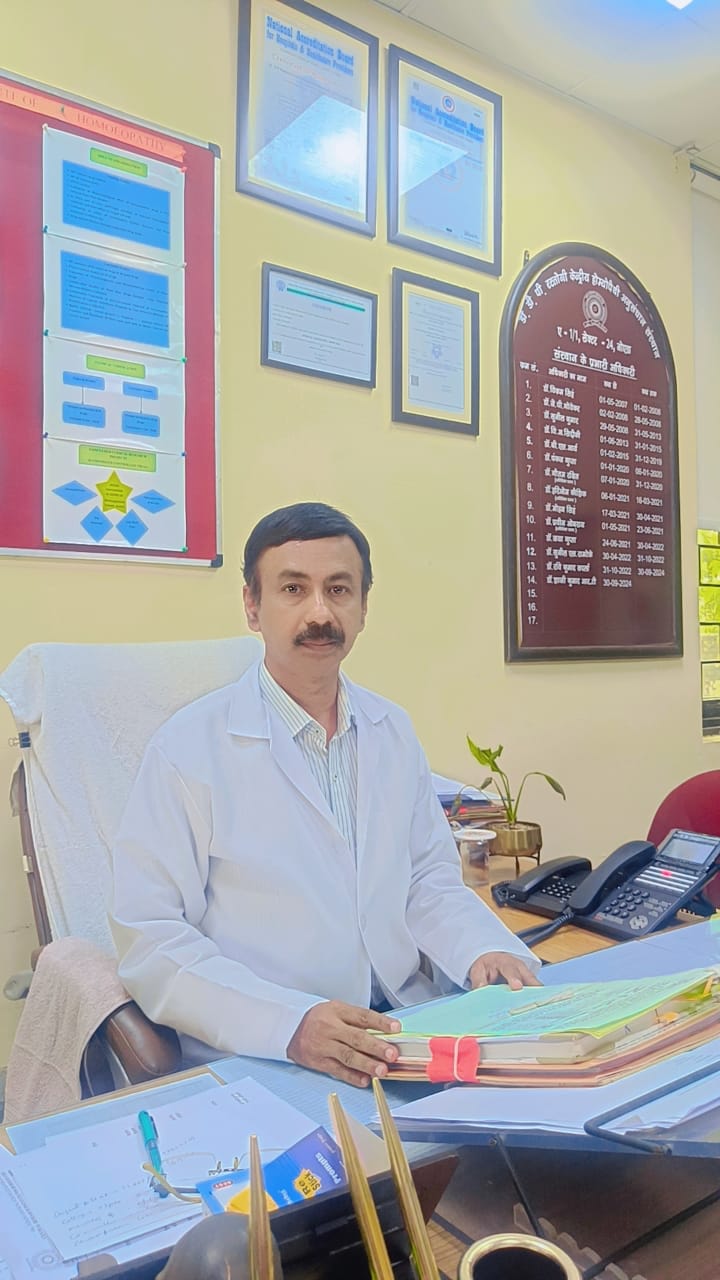
Officer-In-charge: Dr. Shaji Kumar R.T.
Member: Dr. Padmalaya Rath, Scientist-4,
Member: Dr. Harpreet, Scientist-1
Administrative person: Mr. Nikhil Tomar, UDC
Institute Purchase Committee:
Chairman: Principal, Kendriya Vidyalaya, Sec-24, Noida
Member Secretary: Officer In-charge, DDPRCRIH,
Member: Dr. Padmalaya Rath, R.O(H), S-4
Member: Dr. Binit Dwivedi, RO (H), S-4
Institute Books Selection Committee:
Chairman: Dr. Padmalaya Rath, RO (H), S-4
Member: Dr. Binit Dwivedi, RO (Chem.), S-4
Member: Dr. Sonia Raizada, RO (H), S-2
Member: Dr. Kirti Singh, Jr. Librarian Institute
Institutional Ethical Committee:
Chairman: Dr. Surender Singh, Basic Medical Sciences
Member Secretary: Dr. Padmalya Rath,RO(H),S-4, DDPRCRIH, Noida
Member: Dr. A.K.Vichitra, Homeopathic Doctor
Member: Dr. Bhumesh Tyagi, Doctor
Member: Mr. Shamsher Singh, Legal Expert
Member: Mr. Devendra Mittal, DM
Member: Mr. Ankit Saxena, Bio-ethics expert
Member: Dr. Archana Singh,Layman
Scientific Advisory Committee
Chairperson: Dr. R. K. Manchanda
Member Secretary – Officer In-charge, DDPRCRIH, Noida
Member – Dr. Karuna Shanker
Member – Dr. Purnima Shukla
Member- Dr. Vivek Jain
Member – Dr. Suman Lakhanpaul
Internal Complaint Committee
Chairman: Dr. Padmalaya Rath, R.O. (H), S-4
Member: Mrs. Shabnam khan, Advocate, Supreme Court.
Member: Dr. Sonia Raizada, R.O. (H), S-2
Member: Mrs. Nishi Sanoj, Staff Nurse
Member: Mr. Nazim, LDC.
Internal Disciplinary action Committee
Chairman: Dr. Padmalaya Rath, R.O. (H), S-4
Member: Dr. Shweta Gautam, R.O. (H), S-1
Member: Dr Swati Pandey, R.O. (H), S-1
Member: Mrs. Manju, Staff Nurse
Member: Mr. Nikhil Tomar, UDC.
Institutional Animal Ethics Committee
Chairman: ………………..
Main Nominee: Dr. Ashwani Kumar Singh
Link Nominee: Dr. Vijay Pal Singh
Scientist from outside of the Institute: Dr. Savneet Kaur
Socially Aware Nominee: Shri Anurag Agarwal
Scientist Incharge of Animal House Facility and Member Secretary: Dr. Pankaj Gupta
Scientist from different biological discipline: Dr. Shweta Gautam
Biological Scientist: Dr. Satish Patel
Veterinarian: Dr. Insha Mir
Infrastructure
The institute is a branch of the Central Council for Research in Homoeopathy and has been functional since 1st May 2007. It was officially inaugurated and renamed as Dr. D. P. Rastogi CRI (H), Noida on 7th October 2015. Institute is spread in One acre of land (4800 sq.mt) consisting of ground, first, second floor and terrace with various sections. The Ground floor houses the Office of the In-charge, Reception/ Registration Counters, OPDs, waiting hall for patients, Pharmacy, Labs etc. The First floor houses the Pathology (Biochemistry) lab, IPD, Committee Room, etc, while the Second floor houses the Drug Standardisation Lab, Molecular Microbiology Lab, Zebrafish Lab and the Museum. The exterior of the building is decorated with many medicinal plants used in Homoeopathy.
The institute has a total workforce of 15 4personnel, comprising 42 regular and 112 contractual staff members. Additionally, 15 visiting consultants provide specialized services across various fields, including ENT, ophthalmology, and radiology. There is 24-hour Ambulance service for emergency referral purposes.
Publications
Drug standardization department Publication
The Institute drug standardization department has published 87 studies in national and international Journals since 2007.
- Binit Kumar Dwivedi, Sunil Kumar, C. Nayak and B.K. Mehta. Gas chromatography-mass spectrometry (GC-MS)analysis of the hexane and benzene extracts of the Piper betel (leaf stalk) (Family: Piperaceae) from India. J. Med. Plants Res., 4(21) 2010: 2252-2255.
- E. N. Sundaram, K .P. Singh, K. Pratap Reddy, Uma Maheswara Reddy, K.R.J. Nair, Ch. Raveendar and C. Nayak. A preliminary study to evaluate analgesic and behavioral activities of the homoeopathic drug, Anagalis arvensis in rats. Indian Journal of Research in Homoeopathy, 2010, 4(2):41- 48.
- E. N. Sundaram, K .P. Singh, K. Pratap Reddy, Uma Maheswara Reddy, K. R. J. Nair, Ch. Raveendar and C. Nayak. Preliminary studies on analgesic and behavioral activities of the homeopathic formulations of Chenopodium ambrosioides in experimental animal models. Indian Journal of Research in Homoeopathy, 2010, 4(3):44-50.
- E. N . Sundaram, K .P. Singh and Uma Maheswara Reddy. A comparative evaluation of medicinal plants for their hypoglycaemic activity in streptozotocin diabetic rats. Hamdard Medicus, 2010,53(4):5-14.
- E. N. Sundaram, K .P. Singh, K. Pratap Reddy, Sunil Kumar, K. R. J. Nair, Anil Khurana, Hari Singh and C. Nayak. Indigofera tinctoria: a preliminary experimental study evaluating its analgesic and behavioral activities in animals. Indian Journal of Research in Homoeopathy, 2010, 6(1&2):1-7
- Quality assurance of Indian botanicals used in homoeopathy with pharmaco-anatomical profile of Oenothera biennis. Journal of Medicinal and Aromatic Plant Sciences.33(2):198-203,2011.
- Binit Kumar Dwivedi, Sunil Kumar, and E. N. Sundaram. Physicochemical standardization of homoeopathic drug Buxus sempervirens. Proceeding of National seminar on “Recent Trends in Chemical and Biological Science” Dept. of Chemistry, Govt. Holkar Science College, Indore (M.P.), January 13 -15, 2012, P.28-30.
- Binit Kumar Dwivedi, Sunil Kumar, Alok Kumar, Analysis of forskolin in Homoeopathic tinctures by validated HPLC method Int.J.Med.Arom.Plan. 2(1), 2012:195-199
- E. N. Sundaram, K .P. Singh, Uma Maheswara Reddy. Hypoglycaemic activity of Indian medicinal plants in streptozotocin diabetic rats. Journal of Research and Education in Indian Medicine, 2012, 18(1):33 – 43
- E. N. Sundaram, Kushal Pal Singh, Pratap Karnati Reddy, Kainikkara Raven Janardanan Nair, Anil Khurana, Hari Singh, Chaturbhuja Nayak.. An investigation to evaluate the analgesic and central nervous system depressant activities of Solanum nigrum L. in Homoeopathic potencies in experimental animal models. IJRH, 9(1):12-19. 2015
- A. Rathi, D. Suresh Baburaj, E.N. Sundaram, Sunil Kumar, Anil Khurana, Raj K Manchanda. Pharmacognostic study of Chamaecyparis lawsoniana (Murr.) Parl.: A drug used in Homoeopathy. IJRH, 9(1):20-24.2015.
- Gupta P, Sundaram EN, Dwivedi B, Changani S, Kaur H, Nayak D, Khurana A, Manchanda R. Evaluation of antifungal activity of homoeopathic medicines against human pathogenic fungi Candida albicans in-vitro MODEL. J Pharm Pharmacogn Res 3(suppl. 1): S189, 2015
- Singh S, Gupta P, Khurana A, Gupta YK, Manchanda R. Evaluation of pharmacological screening and toxicity profile of selected homeopathic drugs. J Pharm Pharmacogn Res 3(suppl. 1): S25, 2015
- Binit Kumar Dwivedi, Manoj Kumar, Anil Khurana, Bhopal Singh Arya, Echur Natrajan Sundaram, Raj K Manchanda “Comparative standardization study for determination of reserpine in Rauwolfia serpentina homoeopathic mother tinctures manufactured by different pharmaceutical industries using HPTLC as a check for quality control”, IJRH 2017, vol-11 (2), pp: 109-117.
- Prajapati S, Sharma M, Gupta P, Kumar M, Dwivedi B, Arya BS. Evaluation of the antifungal activity of different homoeopathic mother tinctures against Candida albicans. Indian J Res Homoeopathy; 2017;11:237-43
- Rakhi Mishra, Manoj Kumar, Binit Dwivedi, B.S. Arya, Renu Arya. Anil Khurana and R.K. Manchanda, “Chemoprofiling of Homoeopathic drug Coffea Cruda” published in European Journal of Biomedical and Pharmaceutical Sciences on ISSN 2349-8870, Volume: 5, November Issue: 11 276-281, Year: 2018.
- Gupta P, Sundaram EN, Sharma M, Prajapati S, Arya BS, Khurana A, et al. Pre-clinical pharmacology: An important aspect in homoeopathic research. Indian J Res Homoeopathy 2018;12:164-79.
- Rakhi Mishra, Manoj Kumar, Binit Dwivedi, B.S. Arya, Renu Arya. Anil Khurana and R.K. Manchanda. Chemoprofiling of Homoeopathic drug Holarrhena antidysenterica Linn. f” published in Indian Journal of Research in Homoeopathy on ISSN 0974-7168, 12, 4, 2018-19.
- Suneel Prajapati*, Shilpi Singh, Mahima Sharma, Arun Kumar, Digvijay Verma, Pankaj Gupta, Renu Arya, Bineet Dwivedi, Bhopal Singh Arya, Morphological Characterization of Homeopathic Medicinal Plants and Evaluation of their Biological Effect Against the Microsporumcanis. International Journal of Pharmacognosy and Phytochemical Research, April 2019.
- Suneel Prajapati, Mahima Sharma, Arun Kumar, Pankaj Gupta, Binit Dwivedi, Bhopal Singh Arya, Renu Arya, Debadatta Nayak. Antimicrobial activity of different homoeopathic drugs and their potencies against ‘Aspergillusniger’ In-vitro. IJRH, September 2019
- Rakhi Mishra, Manoj Kumar, Binit Dwivedi, B. S. Arya, Renu Arya, Anil Khurana, R.K. Manchanda “Importance of High Performance Thin Layer Chromatography and UV Spectroscopy in Analysis of Homoeopathic Drug Datura Ferox”. International Journal of Advances in Science, Engineering and Technology (IJASEAT). Volume-6, Issue-4, on 26th March 2019
- Morpho-anatomical Observations on Homoeopathic Plant Drug Hygrophila spinosa T. Anderson; Pharmacognosy Journal, vol. 11, issue 2, Mar-Apr, 2019; Digvijay Verma, Shilpi Singh, Renu Arya, Soundararajan Rajan, Bhopal Singh Arya, Anil Khurana, and Raj Kumar Manchanda.
- Binit Kumar Dwivedi et.al A Ready Reckoner of Medicines in Homoeopathic Pharmacopoeia Book Published in 2019published by Central Council for Research in Homeopathy, Ministry of AYUSH, Government of India published on World Integrated Medicine Forum January 2019.
- Megha Ranga, Binit Dwivedi, Renu Arya, Manoj, Anil Khurana. Qualitative analysis of Salvia sclarea (Clary Sage): A Homoeopathic medicinal plant. World Journal of Pharmacy and Pharmaceutical Sciences. Volume 9, Issue 2, 901-912. ISSN 2278 – 4357.
- S Prajapati, M Sharma, A Kumar, P Gupta, NK GV. An Update on Novel COVID-19 Pandemic; A Battle between Humans and Virus. Eur Rev Med PharmacolSci 2020; 24 (10): 5819-5829.
- G.V. Narasimha Kumar, Arun Kumar, Mahima Sharma, Ashish Tripathi, Shilpi Singh, Digvijay Verma, Pankaj Gupta and Suneel Prajapati. Self-Protection of Medical Workers in Traditional Hospitals and Clinics against SARS-CoV-2 Infection”. Coronaviruses, 2020, 1, 1-5.
- Suneel Prajapati, Aarti Bhardwaj ,Pankaj Gupta. Antioxidant and anti-candida activity of selected medicinal plants of Indian origin. International journal edited by the Institute of Natural Fibres and Medicinal Plants. Vol. 66 No. 3 2020.
- Suneel Prajapati, Aarti Bhardwaj, Pankaj Gupta. Anatomical And Phytochemical Standardization Of Terminalia Chebula And Syzygium Jambolanum: A Highly Used Medicinal Plant In India. Plant Cell Biotechnology and Molecular Biology 21(43&44):31-41; 2020
- Binit Kumar Dwivedi, Manoj Kumar, Rakhi Mishra. “High-performance thin-layer chromatography fingerprinting and antioxidant study of Mangifera indica mother tincture”. Part of the Alternative and Complementary Medicine Commons. Published in Indian Journal of Research in Homoeopathy. 2021 Sep 29; 15(3): Article 2.
- Rakhi Mishra, Binit Dwivedi. Cinnamomum camphora: a long history for epidemics control. TMR Integrative Medicine. 2021;5:e21031.
- Binit Kumar Dwivedi, Manoj Kumar, Rakhi Mishra. Book Published: HPTLC Atlas of Medicinal Plant Drugs Used in Homoeopathy, ISBN: 9789381458709, published by Central Council for Research in Homeopathy, Ministry of AYUSH, Government of India published on World Homeopathy Day 10th April 2021, New Delhi, India.
- SuneelPrajapati, Mahima Sharma, Arun Kumar, Ashish Tripathi, GV Narasimha Kumar, Shilpi Singh, Monika Singh, DigvijayVerma, Pankaj Gupta. AYUSH Preparations as Immunity Boosters in the Management of SARSCoV-2: A Review.Current Traditional Medicine, 2021, 7, 1-00
- Sharma M, Prajapati S, Kumar A, Tripathi A, GVN Kumar, Gupta P. Safety Evaluation of Syzygium jambolanum on the Development of Zebrafish Embryos. Indian J of Pharmaceutical Education and Research. 2021;55(1):198-204.
- Kumar GV, Chitra V, Gupta P, Biswas B, Arya R. Preclinical updates of the homoeopathic medicines used in diabetes mellitus: A narrative review. Indian J Res Homoeopathy 2021;15:31-40
- Mahima Sharma, Suneel Prajapati, Arun Kumar, Ashish Tripathi, GV Narasimha Kumar, Pankaj Gupta. Effect of Acute Exposure of Belladonna Mother Tincture on Zebrafish Embryonic Development. Indian Journal of Pharmaceutical Sciences.2021; vol:83(5).
- Sharma M, Gupta PK, Gupta P, Garabadu D. Antinociceptive activity of standardized extract of Bacopamonnieri in different pain models of zebrafish. J Ethnopharmacol. 2022 Jan 10;282:114546. doi: 10.1016/j.jep.2021.114546. Epub 2021 Aug 19. PMID: 34418512
- Arun Kumar, Suneel Prajapati, Mahima Sharma, Tejveer Singh, Neha Choudhary, Alok Bharti, Rohit Sharma, Pankaj Gupta. Quantitative Assessment of Antioxidant Potential of Selected Homeopathic Preparations in Clinical Practice. Drug Metabolism and Personalized Therapy. 2022
- Arun Kumar, Mahima Sharma, Suneel Prajapati and Pankaj Gupta. Adjuvant Approach to Mitigate the Adverse Effects of Cancer Treatments Using Homeopathic Medicines. Current Cancer Therapy Reviews. 2022; 18 (4): 252-261
- Singh T, Chhokar A, Thakur K, Aggarwal N, Pragya P, Yadav J, Tripathi T, Jadli M, Bhat A, Gupta P, Khurana A, Chandra Bharti A. Targeting Aberrant Expression of STAT3 and AP-1 Oncogenic Transcription Factors and HPV Oncoproteins in Cervical Cancer by Berberis aquifolium. Front Pharmacol. 2021 Oct 28;12:757414. doi: 10.3389/fphar.2021.757414. (IF-5.9)
- Tejveer Singh, Nikita Aggarwal Kulbhushan Thakur, Arun Chhokar, Joni Yadav, Tanya Tripathi, Mohit Jadli, Anjali Bhat, Arun Kumar, Ritika Hasija Narula, Pankaj Gupta, Anil Khurana, Alok Chandra Bharti. Evaluation of Therapeutic Potential of Selected Plant-Derived Homeopathic Medicines for their Action against Cervical Cancer. 2022; Homoeopathy
- Rakhi Mishra, and Binit Dwivedi. Antioxidant Study of Coffea Cruda. Journal of General medicine and Clinical Practice, 2022, 5(2).
- Rakhi Mishra, Binit Dwivedi, Deepshikha Gupta. Determination of Digitoxin by High performance thin layer chromatography in Digitalis purpurea. Acta Pharmaceutica Sciencia. 2022, Vol 60:(4).
- Rakhi Mishra, Binit Dwivedi, Deepshikha Gupta. Comparative study of High-performance thin-layer chromatography and Antioxidant potential of Hydrocotyle asiatica mother tincture used in Homoeopathy”. Indian Journal of Research in Homoeopathy. Mar 29; 16(3) September 2022.
- Rakhi Mishra, Binit Dwivedi, Deepshikha Gupta. Physicochemical, Phytochemical, Qualitative HPTLC and Antioxidant Study of Medicinal Plant Leucas aspera. Trends in Sciences, 2022, 19(16), 5646.
- Verma D, Singh S, Patel S, Singh MP. Anatomical characterisation and foliar microscopy of Hypericum perforatum L. Indian Journal of Research in Homoeopathy 16 (1), 2022, 3.
- Roshan Lal , Mahima Sharma , Sangita Behera , Raj Kumar Regar , Deepika Tripathi , G. V. Narasimha Kumar , Satvinder Singh , Digvijay Verma , Pankaj Gupta*, Subhash Kaushik and Anil Khurana. Safety Evaluation of Arsenicum Album in Acute and Sub-Acute Toxicity Studies in Rats. Toxicology International, 30(2) : 233-247; 2023. DOI: 10.18311/ti/2023/v30i2/32299
- Rakhi Mishra, Binit Dwivedi. Development and Validation of a novel High-Performance Thin Layer Chromatography method for the Quantification of Bixin in Bixa Orellana Homoeopathic Mother Tincture. International Journal of General Medicine and Clinical Practice, June 29 2023, Vol. 6(5).
- Rakhi Mishra, Binit Dwivedi. Complementary or Alternative Plant Based Medicines and Its Active Constituents Responsible for Overall Therapeutic Efficacy” in the book Medicinal Plants - Chemical, Biochemical, and Pharmacological Approaches. 2023, (ISBN 978-1-80356-744-0).
- Biswas B, Maity S, Sundaram EN, Kumar GV, Patel S. Physicochemical standardisation of the Homoeopathic drug, Apis mellifica: A preliminary attempt. Indian J Res Homoeopathy 2023;17:143-152.
- Satish Patel, Shilpi Singh, Seema, Digvijay Verma. Foliar characterization of salparni – a remarkable medicinal plant. Vegetos, 2023. https://doi.org/10.1007/s42535-023-00748-5.
- Published a monograph titled Dwivedi B, Verma D, Patel,S, Shashikanth J, Rajan S, Singh S, Mugendhiran S, Kumar M, Sharma R, Ephedra Vulgaris-Monograph, published by CCRH, New Delhi
- Published a monograph titled Dwivedi B, Verma D, Patel,S, Shashikanth J, Rajan S, Singh S, Mugendhiran S, Kumar M, Mishra R, Syzygium jambolanum- Monograph, published by CCRH, New Delhi.
- Sharma M, Behera S, Regar RK, Tripathi D, Singh S, Kumar NGV, Gupta P. Acute and Sub-acute Oral Toxicity Assessment of Ferrum phosphoricum in Rats. Homeopathy. 2024 May;113(2):86-97. doi: 10.1055/s-0043-1770338.
- Goswami A, Narasimha Kumar GV, Saka VP, Gupta P, Verma D. Safety Assessment of Ultra High Dilutions of Camphora officinarum: A Preclinical Investigation.. 2024 Jun;30(6):16-25. PMID: 38843420.
- Goswami A, GV N, Saka V, Gupta P, Biswas B, Verma D. Safety of potentised dilutions of Rhus toxicodendron in Wistar albino rats. 2024;18:3-14. doi: 10.53945/2320-7094.1864.
- Behera Sangita, Sharma Mahima, Lal Roshan, Regar Raj Kumar, Tripathi Deepika, Gupta Pankaj*, Kumar G V Narasimha, Verma Digvijay, Kaushik Subhash and Khurana Anil, Investigation of The Effect of Metal-based Medicine Arsenicum album on Humoral Immune Response in SRBC-immunized Mice. Endocrine, Metabolic & Immune Disorders - Drug Targets 2024; 24(14):1622-1627. doi: 10.2174/0118715303273277231125150713.
- Saka VP, Kumar GVN, Goswami A, Sanapalli BKR, Gupta P, Verma D, et al. (2024) Modulatory action of Bryonia alba on the immune system in cyclophosphamide induced immunosuppression in BALB/c mice. PLoS ONE 19(12): e0309756. https://doi.org/10.1371/journalpone.0309756
- Saka, V.P.; G. V., N.K.; Sanapalli, B.K.R.; Goswami, A.; Roy, A.; Agrawal, A.; Gupta, P.; Verma, D.; Kaushik, S. Unveiling the Immunostimulatory Potential of Rhus Toxicodendron in Immunocompromised Balb/C Mice Induced with Cyclophosphamide. Diseases 2024, 12, 178. https://doi.org/10.3390/diseases12080178
- Standardization of homoeopathic drugs Vol-I (second revised edition) 2024: 1-205
- Published IS 18975:2024 Millefolium (Achillea Millefolium L.) whole plant for use in traditional medicine-specification by Bureau of Indian standards, New Delhi, 29 Nov. 2024 ICS 11.120.10.
- Published IS 18977:2024 Millefolium (Achillea Millefolium L.) Hydro-alcohlic extract for use in Homeopathy-specification by Bureau of Indian standards, New Delhi, 29 Nov. 2024 ICS 11.120.10.
- Published IS 18978:2024 alfalfa (Medicago sativa L.) for use in traditional medicine-specification by Bureau of Indian standards, New Delhi, 29 Nov. 2024 ICS 11.120.10.
- Published IS 18979:2024 Withania somnifera Hydroalcohlic extract for use in Homeopathy-specification by Bureau of Indian standards, New Delhi, 29 Nov. 2024 ICS 11.120.10.
- Sharma, M., Behera, S., Regar, R. K., Gupta, P., Narasimha Kumar, G. V., & Singh, S. (2025). Investigation of immunomodulatory effects of Ferrum phosphoricum in normal and immunosuppressed mouse models. International Journal of High Dilution Research - ISSN 1982-6206, 25(cf), 382–401. https://doi.org/10.51910/ijhdr.v25icf.1640
- Goswami, A., Saka, V. P., Sharma, M., G.V., N. K., Gupta, P., Verma, D., & Kaushik, S. (2026). Toxicological safety profiling of Berberis vulgaris hydroethanolic extract using rodent, zebrafish, and in silico models. Toxicology Reports, 16, 102195. https://doi.org/10.1016/j.toxrep.2025.102195
- Raj Kumar Regar, Mahima Sharma, Sangita Behera, Pankaj Gupta, Roshan Lal, Suneel Prajapati, Arun Kumar, Godlaveti Vijay Narasimha Kumar, Vara Prasad Saka, Anurag Agrawal, Digvijay Verma, Subhash Kaushik, Exploring the therapeutic potential of Terminalia chebula against systemic candidiasis: An in vitro, in vivo, and in silico study, Fitoterapia, Volume 184, 2025, 106649, ISSN 0367-326X, https://doi.org/10.1016/j.fitote.2025.106649
- Behera S, Sharma M, Regar RK, Gupta P, Jabbar S, Kumar GVN, Singh S. Immunomodulatory potential of phosphorus: insights from experimental mice models under normal and immunosuppressive condition. Drug Metab Pers Ther. 2025 Apr 28. doi: 10.1515/dmpt-2024-0103.
- Mahima Sharma, Vara Prasad Saka, Godlaveti Vijay Narasimha Kumar, Sangita Behera, Rajkumar Regar, Pankaj Gupta, Ritika H Narula. Evaluation of Safety and Efficacy of Cuprum metallicum in Zebrafish and Mouse models as a potential drug candidate for the management of seizures. Central Nervous System Agents in Medicinal Chemistry-2025 Feb 6. doi: 10.2174/0118715249345785250114222749.
- Mahima Sharma, Sangita Behera, Rajkumar Regar, Pankaj Gupta, Godlaveti Vijay.Narsimha Kumar, Digvijay Verma, G.N.V. Satyanarayana, Devendra Kumar Patel. Safety Profile Of Matricaria Chamomilla: Insights From Zebrafish Embryo Development Toxicity Testing. Braz. J. Pharm. Sci. 2025; 61: e24183
- Sharma Mahima, Kumar G V Narasimha, Gupta Pankaj, Pharmacological Investigation of Anticonvulsant Effect of ArtemisiaVulgaris on Pentylenetetrazole-Induced Epileptic Seizures in Zebrafish Experimental Model, Current Drug Therapy. 2025; 20(1):95-103. DOI: 10.2174/0115748855268042231130041958
- Homoeopathic Pharmacopoeia of India (HPI) Volume XI” published by Ministry of AYUSH, Government of India, published on World Homeopathy Day 10th April 2025, New Delhi, India.
- Rakhi Mishra, Binit Dwivedi. Physicochemical, Phytochemical and Antioxidant Study of Pyrus Malus, Journal of General Medicine and Clinical Practice,2025, 8(5).
- Binit Kumar Dwivedi, BIS Publications, “Standard Abbreviations of Homoeopathic Drugs” IS 19311:2025
- Binit Dwivedi, BIS Publications, “Janosia ashoka Hydro-alcoholic Extract for Use in Homoeopathy – Specification” IS 19326:2025 (1)
- Binit Dwivedi, BIS Publications, “Methods of preparation of homoeopathic mother tincture Part 1 Maceration” IS 19327:20
- Binit Dwivedi, BIS Publications, “Pilocarapus jaborandi Holmes Leaves for Use in Traditional Medicine – Specification” IS 19344:2025.
- Binit Dwivedi, BIS Publications, “Jaborandi Hydro-alcoholic Extract for Use in Homoeopathy – Specification” IS 19350:2025
- Binit Dwivedi, BIS Publications, “Digitalis Purpurea L Leaves for use in Traditional Medicine – Specification” IS 19343:202
- Binit Dwivedi, BIS Publications, “Digitalis Purpurea Hydro-alcoholic Extract for Use in Homoeopathy – Specification” IS 19351:2025
- Binit Dwivedi, BIS Publications, “Holarrhena anytidysenterica Hydro-alcoholic Extract for Use in Homoeopathy – Specification” IS 19400:2025
- Binit Dwivedi, BIS Publications, “Methods of Preparation of Homoeopathy Mother Tinctures Part 2 – Percolation” IS 19327:2025
- Binit Dwivedi, BIS Publications, “Sugar of Milk for for Use in Homoeopathy – Specification” IS 19415 :2025
- Binit Dwivedi, BIS Publications, “Justicia adhatoda Hydro-alcoholic Extract for Use in Homoeopathy – Specification” IS 19509:2026
- Singh, S., Patel, S. & Verma, D. Morphotaxonomical and anatomical characterization of Achillea millefolium L.: a therapeutic medicinal plant. Discov. Plants 2, 212 (2025). https://doi.org/10.1007/s44372-025-00296-z
- Biswas B, Patel S, Verma D, et al. Physico chemical, pharmacognostic standardisation and phytochemical analyses of the homoeopathic drug Justicia adhatoda. Indian J Res Homoeopathy. 2025;19(4):401–16.
- Rakhi Mishra, Binit Dwivedi, Physicochemical, Phytochemical, and HPTLC Densitometric Analysis of atropine in Datura ferox L. Seed Extract, Next Research,2026,102199, ISSN 3050-4759.
- Sharma M, Gupta P, Behera S, Jabbar S, Regar RK, Narasimha GVK, Agrawal A, Prajapati S, Kumar A, Verma D, Kaushik S. Potential Effect of Belladonna in the Management of Convulsions in Zebrafish (Danio rerio) and In Silico Mechanistic Approach. Ann Neurosci. 2026 Jan 22:09727531251384502. doi: 10.1177/09727531251384502.
- Nahar K, A Homoeopathic Case Study on Urolithiasis: Management with Constitutional Treatment. (2024). African Journal of Biomedical Research, 27(3S), 5718-5724. 2024.
Book/Book Chapter
- Chapter "Role of Network Pharmacology in Homeopathy" in book Network Pharmacology: Principles, Processes and Applications. CRC Press. 2025. ISSN 9781003500964
- Scientific Perspective of Homoeopathic Medicines: A Practitioner's Guide Part 1: Plant Source Medicines, Vol-I, Central Council for Research in Homoeopathy, New Delhi. ISBN: 978-93-7066-873-7
Poster presentations have been done for the following 10 studies:
- Poster “Evaluation of developmental and behavioral fetal embryo toxicity (FET) of acute exposure of Syzygium jambolanum in zebrafish embryo: homeopathic remedy” for RANN-2018 at GLA University, Mathura conference
- Poster “Effect of Lycopodium clavatum (Homeopathic drug) on Developmental and Behavioural Defects in Daniorerio embryo” for the NIPER university conference.
- Poster presentation entitled “Antioxidant Potential and Antifungal Activity of Homeopathic Drug: Syzygium Jambolanum” for DDNPTM-2018 organised by NIPER, Mohali. Abstract accepted for poster presentation.
- Poster entitled “Estimation of Phenolic Content and Antioxidant Potential of Homoeopathic Drugs to Elucidate Their Efficacy Mechanism” for NSMPH-2019 held on 23-24 March at CMPRH, Ooty.
- Poster entitled “Safety evaluation of Acute Exposure of Artemisia vulgaris (ɸ) on Early Life Stage of Zebrafish Embryos Development” at NSMPH-2019, at Ooty.
- Poster in International Convention on World Homoeopathy Day held at Vigyan Bhawan, New Delhi on 9th & 10th April 2016. BinitDwivedi, Manoj Kumar, Firdousmir, Pankaj Gupta, B.S.Arya E.N. Sundaram, Anil Khurana and R.K.Manchanda “Standardization of Homoeopathic drug Curcuma longa”
- Poster presentation at National Conference CPSBT-2018, NIPER Ahmedabad, entitled “A review on Zebrafish as an animal model in Epilepsy a new era of translational research”.
- Poster presentation entitled “HPTLC fingerprinting of Digitalis purpurea using Digitoxin and Rutin as bioactive compounds” at 1st International Conference of Integrative Chemistry Biology & Translational Medicine (ICBTM-2019) Organised by: Loyola University Chicago Stritch School of Medicine, USA and Centre for Global Health, Hansraj College, University of Delhi, India held on 25-26 February, 2019.
- Poster presentation entitled Simultaneous determination of Oleanolic acid, Ursolic acid and Rutin by High-performance thin layer chromatography in Leucas aspera” in Conference NSMPH 2019 " National Seminar on Medicinal Plants used in Homeopathic System, Cultivation, Standardization and Quality Control in India" on 23- 24 March, 2019 Kluney Manor, Ooty.
- Poster presentation entitled Identification of Mangiferine in Homeopathic Mother Tincture by using High Performance Thin Layer Chromatography (HPTLC)” in Conference NSMPH 2019 " National Seminar on Medicinal Plants used in Homeopathic System, Cultivation, Standardization and Quality Control in India" on 23- 24 March, 2019 Kluney Manor, Ooty.
Clinical Research Publications
- C Nayak, Vikram Singh, K Singh, Hari Singh, Anita Sharma, Praveen Oberai, Varanasi Roja, Debadatta Nayak, Maya Padmanabhan, Alok Mishra, GC Sehegal, S Kaushik, CP Chowdhary, VK Singh, Sahid Ali, P Hima Bindu, DB Sarkar. A Prospective Multicentric Observational Study to Evolve the Usefulness of the Predefined Homoeopathic Medicines in the Management of Acute Diarrheal Disease in Children. American Journal of Homoeopathic Medicine, 2009; 102(3), Autum. Reprint in IJRH 2009; 3 (3): 21-28
- Nayak C, Singh V, Singh K, Singh H, Oberai P, Roja V, Padmanabhan M, Prasad S, Arya MD, Mohanan PG, Singh O, John MD, Singh MBK, Bhagat SR, Ramteke S. A multi-centric open clinical trial to evaluate the usefulness of 13 predefined homeopathic medicines in the management of acute rhinitis in children. Int J High Dilution Res [online]. 2010 [cited YYYY Month dd]; 9(30):30-42.
- Roja Varanasi, Rupali Bhalerao; Paul Sumithran; Kiranmayee G. Rompicherla; Pramodji Singh; Sunil S. Ramteke; D. Karthikeyan,Dubashi Ramesh, Bhuvaneswari Subbarayalu, Shraddha Chauhan, Jayakrishnan Venugopal, Shravani Kampilli, Ajay Meena, Arvind Kumar, Viqar Ahmed Siddiqui, Praveen Oberai, Raj K. Manchanda. A Comparative Randomized Controlled Trial of Homeopathy versus Allopathy in Acute Otitis Media and Its Recurrence in Children. Complement Med Res (2025) 32 (2): 110–121.
- Hima Bindu Ponnam , Roja Varanasi , Ratan Chandra Shil , Vinitha E. R. , Meetu Goel , Sunil Ramteke , D. Karthikeyan , D. D. Arya , Trupti Laxmi Swain , Navita Bagdi , Priyanka Srivastava , R. K. Manchanda , Praveen Oberai. Individualized Homeopathic Medicines in the Management of Symptomatic Adenotonsillar Hypertrophy in Children: A Prospective Observational Study. Homoepathy, 2024; 113(01): 032-040
- Praveen Oberai, Varanasi Roja, D. Ramesh, D. D. Arya, G. Ravi Chandra Reddy, S. K. Sharma, Chaturbhuja Nayak, Vikram Singh and Hari Singh. Homeopathic medicines in the management of Benign prostatic hyperplasia: A multi centric prospective observational study. Indian Journal of Research in Homoeopathy, 2012; 6(3):16-25.
- Sharma B, Mehra P, Oberai P, Roja V, Reddy G,
- Arya DD, et al. Homoeopathic treatment for lower urinary tract symptoms in men with benign prostatic hyperplasia: An open label randomised multicentric placebo-controlled clinical trial. Indian J Res Homoeopathy 2018;12:113-24.
- Lamba CD, Oberai P, Wadhwa B, Parveen S, Soren A, Bhuvaneswari R, Pradhan PK, Shinde V, Gupta J. A Multi-Centric Single-Blind Randomized Placebo-Controlled Trial to Evaluate the Efficacy of the Individualized Homeopathic Intervention in Breast Fibroadenoma. OBM Integrative and Complementary Medicine. 2023 May;8(2):1-20.
- C. Nayak, Vikram Singh, Jaya Gupta, Mohd. Shahid Ali, Ramendar Pal, M.D. Arya, P. Hima Bindu, Debadatta Nayak, Paromita Goswami. Homoeopathic individualized LM-potencies versus Centesimal potencies for pain management of cervical spondylosis: A multicenter prospective randomized exploratory clinical study. Indian Journal of Research in Homoeopathy, 2012; 6(4):16-23.
- Gupta J, Bawaskar R, Rao P, Shivadikar A, Sumithran P, Pal R, Ali S, Bindu H, Arya M D, Lamba CD, Kumar A, Kulshreshtha D. Homoeopathic therapy in cervical spondylosis pain management: A randomised, double-blind, placebo-controlled trial. Indian J Res Homoeopathy 2020;14:242-50
- Jaya Gupta; M. Prakash Rao; Kolli Raju; RVR. Prasad; JS Arya; BK Mondal; Gopinadhan Sadanandan; Mohan Singh; Vikram Singh; Chaturbhuja Nayak; Abhishek Pramanik; Arvind Kumar ; Varanasi Roja. Management of early years of simple and mucopurulent chronic bronchitis with pre-defined homeopathic medicines – a Prospective Observational Study with 2-Years Follow-Up. International Journal of High Dilution Research 2019; 18(3-4):47-62
- Chaturbhuja Nayak, Vikram Singh1, VP Singh, Praveen Oberai, Varanasi Roja, Shashi Shekhar Shitanshu, MN Sinha, Deepti Deewan, BC Lakhera, Sunil Ramteke, Subhash Kaushik, Sarabjit Sarkar, NR Mandal, PG Mohanan, JR Singh, Sabyasachi Biswas and Georgekutty Mathew. Homeopathy in chronic sinusitis: a prospective multi-centric observational study. Homeopathy (2012) 101, 84-91
- Praveen Oberai, Subhash Kaushik, Sunil Ramteke etal. A randomised, double-blind, placebo-controlled and parallel-arm trial to assess the effect of homoeopathic medicines on chronic rhinosinusitis. Vol. 17 (2023)
- Lex Rutten, José Eizayaga, Harleen Kaur, Chetna Deep Lamba, Jyoti Sachdeva, Anil Khurana, Praveen Oberai, Rajkumar Manchanda, Sonia Raizada, Sujata Chaudhary, Vaishali Shinde, Vinitha Edavattath Ramanan, Chittaranjan Kundu, Pratha Pratim Pal, Rompicherla GR Kiranmayee, Amulya Ratan Sahoo, Bodankar Rajeshekhar, Ratan Chandra Shil, Nidhi Mahajan. Counting Polar Symptoms: How to Represent Results. Homeopathy 2021; 110(01): 027-035
- Kaur H, Lamba CD, Sachdeva J, Rutten L, Khurana A, Oberai P, Manchanda RK, Raizada S, Chaudhury S, Ramanan VE, Shinde V, Kundu C, Pal PP, Kiranmayee RG, Sahoo AR, Rajeshekhar B, Shil RC, Mahajan N. Optimising the use of polar symptoms in Homoeopathy: Introduction to a pilot study of prognostic factor research in chronic cough. Indian J Res Homoeopathy 2020;14:200-10
- Kaur H, Rutten L, Rao S, Bajpai A, Lamba CD, Sachdeva J, Vinitha ER, Raizada S, Kiranmayee RG, Rajashekhar B, Kundu C. Homoeopathic treatment for chronic cough–a multicentric, prospective, exploratory trial. International Journal of High Dilution Research-ISSN 1982-6206. 2024 May 18;23(cf):146-60.
- Chaturbhuja Nayak , Vikram Singh, Krishna Singh, Hari Singh, Jaya Gupta, Chetna Deep Lamba, Anita Sharma, Bindu Sharma, Balachandran Indira, Subburayalu Bhuvaneshwari, Simran Kaur Bindra, Kunapuli Sree Venkata Bharata Luxmi. Management of Distress during Climacteric Years by Homoeopathic therapy. The Journal of Alternative & Complementary Medicine, 2011; 17 (11):1037-42
- C Nayak, Vikram Singh, K Singh, Hari Singh, P S Chakraborty, Subhash Kaushik, Debadatta Nayak,
- Vinay Kumar, Maya Padmanabhan, Ramendra Pal, A K Tyagi, A K Bhakat5, L Debata and P K Kundu. A prospective multicentre observational study to evaluate the role of homeopathic therapy with a group of predefined homoeopathic medicines in the management of gastroenteritis. International Journal of Bio Research 2010; 1(2): 34-42. Reprint: IJRH 2011; 5(1): 28-35
- Varanasi R, Kolli R, Rai Y, Ramesh D, Kiranmayee R G, Chandra Reddy G R, Baig H, Patole T, Srivastava P, Bhalaerao R, Chaudhary A, Kumar A, Sarathy V, Jayasri G R, Sachdeva G, Jain SK, Sharma N, Amsole S, Oinam A, Oberai P, Manchanda RK. Effects of individualised homoeopathic intervention in Stage I essential hypertension: A single-blind, randomised, placebo-controlled trial. Indian J Res Homoeopathy 2020;14:3-14
- Chakraborty P S, Lamba C D, Nayak D, John M D, Sarkar D B, Poddar A, Arya J S, Raju K, Vivekanand K, Singh H B, Baig H, Prusty A K, Singh V, Nayak C. Effect of individualized homoeopathic treatment in influenza like illness: A multicenter, single blind, randomized, placebo controlled study. Indian J Res Homoeopathy 2013;7:22-30
- Oberai P, Indira B, Varanasi R, Rath P, Sharma B, Soren A, Laxmi KB, Sharma A, Devi P, Padmanabhan M, Singh V, Nayak C. A multicentric randomized clinical trial of homoeopathic medicines in fifty millesimal potencies vis-à -vis centesimal potencies on symptomatic uterine fibroids. Indian J Res Homoeopathy 2016;10:24-35
- Khurana A, Mittal R, Rath P, Moorthy K, Taneja D, Singh U, Mishra K, Manchanda RK. Ferrum phosphoricum 3X and Ferrum metallicum 3X in the treatment of iron deficiency anaemia in children: Randomized parallel arm study. Indian J Res Homoeopathy 2020; 14:171-8
- Lamba CD, Oberai P, Manchanda RK, Rath P, Bindu P H, Padmanabhan M. Evaluation of homoeopathic treatment in polycystic ovary syndrome: A single-blind, randomised, placebo-controlled pilot study. Indian J Res Homoeopathy 2018;12:35-45.
- Jaya Gupta, Dimpi Kulshreshtha, Chetna Deep Lamba, Payal Gupta, Vaishali Shinde, Bharti Wadhwa, Arti Soren, J. S. Arya, Munmun Koley, Abhishek Pramanik, Suraia Parveen, Arvind Kumar. Homoeopathic medicine – Sepia for the management of menopausal symptoms: A multicentric, randomised, double-blind placebo-controlled clinical trial. Indian J Res Homoeopathy 2019;13:219-28.
- Taneja, D., Sadhukhan, M., Rath, P., Sarangi MR etal. Open-Label Study to Evaluate the Response to Homeopathic Treatment of Psoriasis, OBM Integrative and Complementary Medicine 2022; 7(3), doi:10.21926/obm.icm.2203044
- VA Siddiqui, Hari Singh, Jaya Gupta, C Nayak, Vikram Singh, MN Sinha, AK Gupta, Paul Sumithran, Yogander Rai, Rajakumar, Rupali Dixit, Deepti Dewan. A multicentre observational study to ascertain the role of homoeopathic therapy in Urolithiasis. IJRH. 2011 ; 5( 2): 30-39
- Bhalerao R, Oberai P, Mehra P, Rai Y, Choubey G, Sahoo AR, Majumder A K, Sah M, Gupta A K, Tyagi A K, Siddiqui V A, Kumar A, Manchanda RK. Lycopodium clavatum for the management of urolithiasis: A randomised double blind placebo controlled trial. Indian J Res Homoeopathy 2019;13:139-49
- Chakraborty P S, Kaushik S, Debata L, Ram B, Kumar R, Shah M, Jha D K, Ramesh D, Padmanabhan M, Nayak C, Singh V. A multicentric observational study to evaluate the role of homoeopathic therapy in vitiligo. Indian J Res Homoeopathy 2015;9: 167-75
- Kaur, H., Rutten, A. L. B., Manchanda, R. K., Arya, B. S., Sharma, S., Rai, Y., Upadhyay, A. K., Ghosh, S., Giri, K. R., Mittal, R., Mishra, P., Halder, S., & Shaw, R. (2025). Enhancing homeopathic prescribing for chronic cough by classifying the reliability of polar symptoms. Homeopathy. Advance online publication. https://doi.org/10.1055/a-2631-9180
- Kaur H, Jain S, Katarmal D, Sachdeva J, Ponnam HB, Muraleedharan KC, Parveen S, Raizada S, Karso L, Bala R, Srivastava A. The Patient Population at Homeopathic Outpatient Clinics across India: A Clinical Data Collection Study. Homeopathy. 2024 May 31.
- Chaudhary A, Nayak D, Pandey S, Shastri V, Kamble M, Pendse V, Prajapati V, Vaidya B, Rohit H, Beedmani S, Presswala N. Association between Usage of Prophylactic AYUSH Medicines and Disease Severity in COVID-19 Patients: A Retrospective Cohort Study. Homeopathy.
- Rath, P., Gautam, S., Jain, S., Bajpai, A., Singh, M., & Kaushik, S. Impact of third wave of COVID-19 pandemic on mental health and its related lifestyle: a cross sectional survey. International Journal Of Community Medicine And Public Health, 10(2), 766–775.
- Padmalaya Rath, Bindu Sharma, Priya Gautam, Pankhuri Misra. Systematic review of usefulness of homeopathy for treatment of Polycystic Ovarian Syndrome. PROSPERO 2021 CRD42021259208
- Rath, Padmalaya; Sharma, Bindu; Gautam, Priya; Misra, Pankhuri; Efficacy of homoeopathy in PCOS,Current Women's Health Reviews, Volume 20, Number 4, 2024, pp. 33-46(14)
- Meenachem oberbaum. Anupriya Choudhary, Hima Bindu Ponnam, Reetha Krishnan, Dinesh V, Md Irfan, Debadatta Nayak, Swati Pandey et.al. Homoeopathy vs. conventional primary care in children during the first 24 months of life-a pragmatic randomized controlled trial: European Journal of Pediatrics: 2024 oct.; vol. 183, pg. 5455-5465.
- Kaur H, Sachdeva J, Bawaskar R, Goyal T. Comparative Evaluation of Effectiveness of Standard of Care Alone and in Combination With Homoeopathic Treatment in COVID-19–Related Rhino-Orbito-Cerebral Mucormycosis (ROCM): Protocol for a Single Blind, Randomized Controlled Trial. JMIR Res Protoc 2025;14:e57905
- Kaur H, Jain S, Katarmal D, Sachdeva J, Ponnam HB, Muraleedharan KC, Parveen S, Raizada S,etal. The Patient Population at Homeopathic Outpatient Clinics across India: A Clinical Data Collection Study. Homeopathy. 2024 May;114(2):74-84
- Kaur, H., Rutten, L., Rao, S., Bajpai, A., Lamba, C. D., Sachdeva, J., ER, V., Raizada, S., Kiranmayee, R. G., Rajashekhar, B., Kundu, C., Shinde, V., Choudhury, S., Sahoo, A. R., Shil, R. C., Chakma, A., Mahajan, N., Mishra, A., Khurana, A., Oberai, P., & Manchanda, R. K. (2024). Homoeopathic treatment for chronic cough – a multicentric, prospective, exploratory trial. International Journal of High Dilution Research - ISSN 1982-6206, 23(cf), 146–160.
- Rutten L, Eizayaga JE, Kaur H, Rao S, Bajpai A, Lamba CD, Sachdeva J, R VE, Raizada S, Kiranmayee RG, Rajashekhar B, Kundu C, Shinde V, Choudhury S, Sahoo AR, Shil RC, Chakma A, Mahajan N, Mishra A, Khurana A, Oberai P, Manchanda RK. How to Assess Variation in Homeopathic Prognostic Factor Research? Homeopathy. 2025 May 30. doi: 10.1055/a-2544-2807. PMID: 40446840.
- Debadatta Nayak, Lovepreet Kaur, Rupali Bhalerao, Karanpreet Nahar etal. Effectiveness of Eupatorium Perfoliatum 30C in Preventing Dengue Fever-A Prospective, Community-Based, Open Label, Parallel Cohort Study in Delhi, India. Homeopathy. 2024 Oct 24. doi: 10.1055/s-0044-1788663.
- Correlation of telomere length, telomerase activity, and hTERT expression in Head and neck squamous cell carcinoma cell lines: A pilot study comparing cancer cells and normal PBMCs from non-malignant individuals. 2024. [Pre print]
- Kaur H, Jain S, Katarmal D, Sachdeva J, Ponnam HB, Muraleedharan KC, Parveen S, Raizada S, Karso L, Bala R, Srivastava A, Shinde V, Ramteke S, Choubey G, Kundu C, Ramanan VE, Patole T, Sonny R, Bhattacharjee B, Sardarla RK, Bawaskar RS, Reddy GRC, Avinash KK, Tamang S, Prusty AK, Sadhukhan M, Maglara A, Garoufali A, Stassinopoulos M, Lilas T, Tapakis L, Khurana A, Manchanda RK. The Patient Population at Homeopathic Outpatient Clinics across India: A Clinical Data Collection Study. Homeopathy. 2024 May;114(2):74-84.
- Kaur, H., Jain, S., Katarmal, D., Sachdeva, J., Ponnam, H. B., Muraleedharan, K. C., Parveen, S., Raizada, S., Karso, L., Bala, R., Srivastava, A., Shinde, V., Ramteke, S., Choubey, G., Kundu, C., Ramanan, V. E., Patole, T., & ... (2025). The patient population at homeopathic outpatient clinics across India: A clinical data collection study. Homeopathy, 114(2), 74–84. https://doi.org/10.1055/s-0044-1782221
- Nayak, D., Devarajan, K., Pal, P. P., & Khurana, A. (2026). Concurrent utilization and medication adherence of Arsenicum album 30C as prophylactic against COVID-19: A cross-sectional, community-based study. Homeopathy, 115(1), A1–A26.
- Kaur H, Jain S, Katarmal D, Sachdeva J, Ponnam HB, Muraleedharan KC, Parveen S, Raizada S, Karso L, Bala R, Srivastava A. The patient population at homeopathic outpatient clinics across India: a clinical data collection study. Homeopathy. 2025 May;114(02):074-84.
- Nayak, D., Nahar, K., Kaur, L., et al. (2025). Adherence to prophylactic use of homeopathic Arsenicum album during COVID-19 in India: A cross-sectional study in 23 cities. Homeopathy. Advance online publication. https://doi.org/10.1055/a-2636-4424
- Suhana Panaparambil Azis, Charu Sehgal, Partha Sarathi Chakraborty, Prasanta Kumar Pradhan, Punam Kumari, Kaushal Kumar Savera, Amit Srivastava, Ratan Chandra Shil, Kumar Keshav Avinash, Sunil S Ramteke, Amulya Ratna Sahoo, Tejaswini Patole Kamble, Uttam Singh, Mahesh Sah, Ranjit Sonny, Liyi Karso, Vibha Kumari, Divya Verma, Rakesh Kumar Rana, Kusum Lata, Beenu Saini, Satarupa Sadhukhan, Renu Verma, Ann Maria Rose, Manila Kumari, Meera Sharma, Gauri Saxena, Subhash Kaushik, Homoeopath, May 2026, DOI: 10.1055/a-2625-0202
- Rutten L, Eizayaga JE, Kaur H, Rao S, Bajpai A, Lamba CD, Sachdeva J, ER V, Raizada S, Kiranmayee RG, Rajashekhar B. How to assess variation in homeopathic prognostic factor research?. Homeopathy. 2025 May 30.
- Varanasi, R., Srivastava, A., Goyal, A., Bajpai, A., Srivastava, P., Kumari, P., … Manchanda, R. K. (2025). Outpatient Evaluation of Homeopathy in Non-communicable Diseases in India using Patient-reported outcome measures: a data collection study. International Journal of High Dilution Research - ISSN 1982-6206, 25(cf), 267–280. https://doi.org/10.51910/ijhdr.v25icf.1604
Other publications:
a) Case Series and Care Reports:
-
-
-
- Rath P, Shukla I. Homoeopathic management of non-responsive, nodulocystic acne: A case report. Indian J Res Homoeopathy. 2023;17(2):173-180.
- Rath P, Saraswat K. Management of ovarian cyst through Sepia in LM potency- two case reports. JISH. 2023;6(1):53-60.
- Rath P, et al. Homoeopathy – An Alternative to Conventional Treatment for Infertility. Homœopathic Links. 2024;37(1):58–59.
- Rath P, Mondal S, Thakur T. Management of Acne Vulgaris with Homeopathic Treatment – A Case Series. AYUHOM. 2023;10(2):90-98. doi: 10.4103/AYUHOM.AYUHOM_4_23.
- Rath P, Wadhwa B, Saraswat K, Singh A. Management of Ovarian Cysts through Individualized Homoeopathic Medicine: A Case Series. Homœopathic Links. 2024.
- Rath P, Jana SN. Responding to Disaster Health Needs with Homoeopathy. Disaster: Response & Management J. 2023;10(1):28-42.
- Rath P, Jana SN, Nayak C, Saraswat K. Prerequisites for novice researchers to conduct clinical research. J Ayurved Homeopath Allied Health Sci. 2023;2(1):25-30.
- Nahar K, Kaushik S. Homoeopathy for management of type 2 diabetes mellitus in a patient of major depressive disorder - A case report. Indian J Res Homoeopathy 2021;15 (1):55-61.
- Padmalaya Rath, Harleen Kaur. A case of haemorrhoid in a 12yrs child. 2014 IJRH,vol.8,issue.1: 37-41.
-
-
- Rath P. Management of PCOS through Homoeopathy-A case report. Indian J Res Homoeopathy, 2018; 12 (2):95-100.
- Rath P, Goswami A; A Case of Infertility with PCOD treated with Non Invasive Homoeopathy. Advancement in Homoeopathic Research, 2018; 3 (2): 23-26.
- Padmalaya Rath, Shruti Jain. A case of secondary infertility with uterine fibroid treated with Homoeopathic medicine. IJRAR, 2019; l6 (2): 1013-1021.
- Padmalaya Rath, Bhopal Singh Arya, Anil Kumar Vichitra, Udaiveer Singh. Case Series of Dengue Treated with Homoeopathic Intervention. 2019, Homœopathic Links, 32 (1): 31-35.
- Amiya Goswami, Rath P. Homoeopathic approach in infertility and PCOD. Scholarly Research journal for interdisciplinary studies; 7 (45): 67-71.
- Rath P, Parul. Homoeopathic treatment of chronic urticaria – A case series. Indian J Res Homoeopathy 2020;14 (4):267-78.
- Rath P, Gautam S. Homoeopathic Management in a Case of Infertility with PCOS. Homoeopathic link. 2021; 34 (2): 148-152.
- Padmalaya Rath. A Case of Acne Vulgaris Treated with Homoeopathy, Clinical Images. Homoeopathic Links 2020;33(3):244.
- Rath P. A case of infertility due to PCOS treated successfully with homoeopathy. International Journal of Homoeopathic Sciences 2020; 4(2): 249-260.
- Wadhwa B. A case report of fibroadenosis alleviated with Homoeopathy. Indian J Res Homoeopathy 2017;11 (3):196-202.
- Sonia Raizada. Catheter removed with homoeopathy in patient of benign prostatic hypertrophy and renal calculus: A case report. International Journal of Homoeopathic Sciences. 2019; 3 (4): 9-15.
- Punam Kumari. Hemorrhagic ovarian cyst treated with constitutional Homoeopathy: A case report. 2020 International Journal of Homoeopathic Sciences, 4 (4 part C): 143-147.
- Punam Kumari. Management of leiomyoma with lesser known medicine Aurum Muriaticum Natronatum: a case report. 2021 International Journal of AYUSH, 10 (1):23-34.
- Kaur H, Singh R. Infantile haemangioma treated with Homoeopathy: A case report. Indian J Res Homoeopathy 2024;18:78-85.
- Punam Kumari, Verma R. Nephrotic syndrome treated with homoeopathy: An evidence-based case-report. Indian J Res Homoeopathy 2022; 16(3). doi: 10.53945/2320-7094.1047
- Punam Kumari. Uterine Fibroid Treated with Homoeopathic Medicine: A Case Report. Homœopathic Links. 2022; 35. 205-209. 10.1055/s-0042-1742592.
- Punam Kumari, Shivam Kumar, Renu Verma. Management of tinea corporis with the minimum doses of homoeopathic nosode Psorinum: A case report. Indian J Res Homoeopathy 2024;18:86-91.
- Punam Kumari, Shivam Kumar, Renu Verma. Healing of Haemorrhoidal Disease with Homoeopathy – A Case Series. Homœopathic Links. 2024; 10.1055/s-0042-1755531.
- Raizada S, Shukla I. A Survey Report on Rise in Respiratory Illnesses Due to Air Pollution and Its Homoeopathic Management. Homœopathic Links. 2021 Dec;34(04):278-82.
- Raizada S. Homoeopathic management of polycystic ovarian syndrome–A case series. Indian Journal of Research in Homoeopathy. 2022;16(3):7.
- Raizada S, Shukla I. Complete Resolution of Peptic Ulcer by Individualised Homoeopathic Anti-Miasmatic Treatment—A Case Report. Homœopathic Links. 2023 Mar;36(01):069-72.
- Raizada S, Shukla I. Human Cystic Echinococcosis Treated with Individualised Homoeopathy—A Case Report. Homœopathic Links. 2024 Nov 11.
- KBD Kumar, P Rath, T Thakur, Homoeopathic Management of Male Infertility – A Case Series, Homoeopathic Links 36(12)
- Rath , P.et al.A Case of Uterine Fibroid Associated with Gallbladder Polyp Treated with Homoeopathy;Homœopathic Links
- Rath P. Management of PCOS through Homoeopathy-A case report. Indian J Res Homoeopathy 2018;12:95-100.
- Rinku Bishwas, Karanpreet Nahar etal. A Homoeopathic Case Study on Urolithiasis: Management with Constitutional Treatment. African Journal of Biomedical Research. September 2024 Vol. 27 .
- Debadatta Nayak, Lovepreet Kaur, Rupali Bhalerao, Karanpreet Nahar etal. Effectiveness of Eupatorium Perfoliatum 30C in Preventing Dengue Fever- A Critical Appraisal.Feb 2025 doi: 10.1055/s-0044-1801390.
- Homoeopathic management of Verruca Vulgaris- A case series accepted in will be published in upcoming AYUHOM
- Rath P, Gautam P, Goswami AD, Jana SN.Polycystic ovarian syndrome and homoeopathic management: Acase series.Indian J Res Homoeopathy 2024;18:200-211.
- Human Cystic Echinococcosis Treated with Individualised Homoeopathy—A Case Report. Homœopathic Links. 2025 Mar; 38(01):050-4.
- Kaur H, Singh R. Infantile haemangioma treated with Homoeopathy: A case report. Indian J Res Homoeopathy 2024;18:78-85.
- Punam Kumari, Shivam Kumar, Renu Verma, Management of tinea corporis with the minimum doses of homoeopathic nosode Psorinum: A case report,IJRH, 2024, DOI:10.53945/2320-7094.1857
- P Kumari, R Verma, S Kumar, Healing of Haemorrhoidal Disease with Homoeopathy–A Case Series, Homoeopathic Links,2024, DOI: 10.1055/s-0042-1755531
- Punam Kumari, Renu Verma Adolescent Male Androgenetic Alopecia with Iron Deficiency Anemia: A Case Treated with Individualized Homeopathy, 2024,DOI: 10.4103/AYUHOM.AYUHOM_38_23
- P Kumari, T Thakur, Management of generalized anxiety disorder with homoeopathic medicine Calcarea carbonica in LM potency: A case report, 2025, 10.53945/2320-7094.2049
- P Kumari, T Thakur, Exploring Homoeopathic Interventions in Comorbid Presentation of IgA Nephropathy: A Case Report,2025, Advancements in homoeopathic research, https://doi.org/10.48165/ahr.2025.10.3.3
b) Review Article
- 1. S. Kaushik. Review draft: Homoeopathy in treatment of type II Diabetes Mellitus – Journal of Homoeopathy University, Annual Homoeopathic Journal, Volume 2, Issue April 2016, pg. 63-68.
- Karanpreet Nahar, Subhash Kaushik. Role of a Homoeopathic physician in Modern scenario. Homoeopathic Medical Association Magazine of Muzaffarnagar, Uttar Pradesh. 2018, pg. 97-98.
- Subhash Kaushik. Karanpreet Nahar. Homoeopathic Case Series writing– An Overview Article, Journal of Homoeopathy University, Annual Homoeopathic Journal, Volume 4, issue April 2019, pg. 43-47.
- सुभाष कौशिक. हिंदी पत्रिका “आयुषी”, केंद्रीय होम्योपैथी अनुसंधान परिषद् वर्ष 2017, लेख “हिंदी का शब्द-भण्डार”, प्रष्ठ सं 4-5.
- सुभाष कौशिक. हिंदी पत्रिका “आरोही”, केंद्रीय होम्योपैथी अनुसंधान परिषद् वर्ष 2019, लेख “स्वच्छ भारत”, प्रष्ठ सं 21-23.
- सुभाष कौशिक. हिंदी पत्रिका “ सृष्टि”, राष्ट्रीय होम्योपैथी मानसिक स्वास्थ्य अनुसंधान संस्थान , कोट्टायम, केरल, वर्ष 2020, लेख “हिंदी का शब्द-भण्डार”, प्रष्ठ सं 24-25.
- Padmalaya Rath. Book review on Invertabrates in Homoeopathy. Homoeopathic link, 2020;33: (1) 59.
- Rath P, Jana S. A Brief Account of Homoeopathic Approach to Fight COVID-19 Disaster; review article. Homoeopathic Links, 2020, 33 (3): 147-152.
- S.N. Jana, Padmalaya Rath. Rediscovery of Materia medica- Abrotanum. e-newsletter, Vol. III, Homoepathic pulse, ejournal of Delhi govt, 2014.
- S. N. Jana, Padmalaya Rath. Rediscovery of Materia medica- Acetic acid. e-newsletter; Vol. V, Homoepathic pulse, ejournal of Delhi govt, 2014.
- S. N. Jana, Padmalaya Rath. Rediscovery of Materia medica- Aconite napellus. e-newsletter; Vol. VI, Homoepathic pulse, ejournal of Delhi govt, 2015.
- Padmalaya Rath. Chapter Reproductive Health; “Orientation Guideline for Doctors in respect of Homoeopathy”. CCRH, Ministry of AYUSH, 2020.
- Pritha Mehra. Short Communication: Usefulness of homeopathy in essential hypertension: an exploratory interventional trial. International Journal of High Dilution Research. 2015; 14(1):16-19.
- Pankhuri Misra, Pritha Mehra. Memoir: Dr. Christian Friedrich Samuel Hahnemann (1755–1843). Homœopathic Links 2020, 33 (02), 076-077.
- Karanpreet Nahar. Lessons learnt from the Spanish Flu pandemic. Indian Journal of Research in Homoeopathy. 2020. 14: 295-296.
- Solanki A, Nahar K, Meena H. Artificial intelligence in healthcare: Have We Made the transition from fiction to reality? International Journal of Advanced Medical and Health Research. 2019. 6(2):39.
- Karanpreet Nahar, Chautubhuja Nayak. Review of Literature for Dissertation: Why and How?. Advancements in Homoeopathy Research. 2023. 8(1): 28-32.
- Komal Prajapati, Karanpreet Nahar. Implications of physiological action of Calendula officinalis to understand its guiding symptoms. International Journal of Research Health and Allied Sciences. 2021.
- Komal Prajapati, Karanpreet Nahar. A lesser-known Homoeopathic remedy to combat ill-effects from post COVID illness. International Journal of Research Health and Allied Sciences. 2021.
- Tridibesh Tripathy, Shankar Das, Umakant Prusty, Chintamani Nayak, Lipipuspa Devata, Padmalaya Rath etal. Exercise, Diet, Homoeopathy- a Healing Triad of Resistant Hypertension; East African Scholars J Med Sci;, 6(5), 147-152.
- Raj K. Manchanda, Anupriya Chaudhary, Swati Pandey, Altunay Agaoglu. Modernization and Standardization of Homoeopathic Education Globally: A LMHI Initiative: Homoeopathy for all 2024 July; vol 26, no.7 (292) pg 29-33.
- Rath, Padmalaya; Sharma, Bindu; Gautam, Priya; Misra, Pankhuri; Efficacy of homoopathy in PCOS,Current Women's Health Reviews, Volume 20, Number 4, 2024, pp. 33-46(14)
- Rath P, Jana SN, Nayak C, Saraswat K. Prerequisites for novice researchers to conduct clinical research. J Ayurved Homeopath Allied Health Sci 2023; 2:25-30.
- Singh, Kirti, Upadhyay, Ashok Kumar and Singh, Shiv (2020). “Research Output of Indian Scholars on Anemia: A bibliometric analysis”. Elementary Education Online, 2020; Vol 19 (Issue 3): pp. 4756-4768
- Singh, Shiv, Singh, Kirti & Munjal, N (2021). "Global Research Output on First Principles: A Scientometric study". In (Eds) Tarsem Lal "Emerging Trends in Academic Libraries in ICT Era", Saptrishi Publications, Chandigarh, 61-7p. ISBN: 978-93-906-76-2.
- Singh, Kirti, Upadhyay, Ashok Kumar and Singh, Shiv (2021). “Indian Research Trends in Thalassemia: A bibliometric study”. International Journal of Biology, Pharmacy and Allied Sciences, Special Issue, 2021, 10(12): pp.81-89.
- Singh, Kirti, Upadhyay, Ashok Kumar and Singh, Shiv (2022). “Indian Research Trends on Leukemia: Evidence from PubMed”. Virtual International Conference on Library and Information Science (VICLIS-2022), Conf. Proc., pp.14.
- Mukhrjee, Maitri, Upadhyay, Ashok Kumar and Singh, Shiv and Singh, Kirti (2022) “A scientometric examination of Oceanography research in India” Information, Knowledge &Research: Changing Role of Libraries ICAL-2022, 123-127.
- Singh, Shiv, Singh Kirti, Ahmed J, Soni VM, Munjal N (2022). "Research and Development of Biomass Production in India: A Bibliometric Study." Advances in Functional and Smart Materials: Select Proceedings of ICFMMP 2021. Singapore: Springer Nature Singapore,. 161-173.
- Singh, Shiv, Soni, Vijay Mohan Singh, Kirti, and Munjal, Neha (2023). “Research Output on Ecological Awareness: A Bibliometric Survey 2009-2018”. Proceedings of the International Conference on Materials for Emerging Technologies, AIP Conf. Proc. 2800, pp. 020312-1–020312-7.
- Singh, Shiv,Singh Kirti, Mishra, Reena, Soni, Vijay Mohan and Munjal, Neha (2023). “Global research on medical physics: Evidence from WOS”. 3rd National Conference on Recent Advancement in Physical Sciences (NCRAPS-2021), AIP Conf. Proc. 2728, pp. 040009-1–040009-10.
- Singh, Kirti, Upadhyay, Ashok Kumar and Singh, Shiv (2023). “Indian Publications Trend in Coagulation Research: Evidence from Pubmed”. 3rd International Conference of the Central Government Library Association (CGLA), Conf. Proc., pp.28-33.
- Kaur, H., and N. Pandey. “Unmasking Warts: A Critical Review of Homoeopathic Research”. International Journal of Alternative and Complementary Medicine, Vol. 7, no. 1, May 2026.
- Nahar, K. , Kaur,H :A review on change in Indian consumer attitude amidst COVID-19 pandemic. Advances in Consumer Research. 2(5). 2025
- Nayak, D., Kaur, L., Bhalerao, R., Nahar, K., et al. (2025). Response to the Letter to the Editor: Effectiveness of Eupatorium perfoliatum 30C in preventing Dengue fever: A critical appraisal. Homeopathy, 114(3). https://doi.org/10.1055/s-0044-1801390
- Sachdeva J, Misra P, Kumar S, Taneja D, Mittal R, Kaushik S. अध्ययन, अध्यापन, अनुसंधान: Celebrating 270 years of Homoeopathy and Scientific Integration. Indian Journal of Research in Homoeopathy. 2025;19(3):333-58.
- Rath P, Sharma B, Gautam P, Misra P. Efficacy of Homoeopathy In PCOS-A Review. Current Women's Health Reviews. 2024 Jul 1;20(4):33-46.
c) Books/Monographs (Contribution in content development):
-
-
-
- H. Baig, K. Singh, A. Sharma, P. Oberai, S. Kaushik, D. Nayak, A. Mishra. Role of Cephalandra indica Q in the management of Diabetes Mellitus as an add on medicine along with conventional antidiabetics. CCRH’s Clinical Research Studies (series-II), 2010, pg.15-20.
- H. Baig, K. Singh, A. Sharma, S. Kaushik, A. Mishra. Rhus aromaticus in the management of Diabetes mellitus, CCRH’s Clinical Research Studies (series-II), 2010, pg.21-27.
- H. Baig, K. Singh, A. Sharma, S. Kaushik, A. Mishra, Suniti Chugh. Essential hypertension, CCRH’s Clinical Research Studies (series-II), 2010, pg.29-41.
- B. C. Lakhera, I. M. Dhawan, Manjushree, S. Kaushik, A. Mishra, Suniti Chugh. Essential hypertension (Drug related study), CCRH’s Clinical Research Studies (series-II), 2010, pg.43-49.
- R. V. R. Prasad, Ch. Raveender, B. Lakshmi, K. Singh, A. K. Vichitra, P. Oberai, R. Mittal. Clinical evaluation of predefined homoeopathic medicine in Vitiligo, CCRH’s Clinical Research Studies (series-II), 2010, pg.85-92.
- Anita Sharma, Praveen Oberai, Subhash Kaushik, Padmalaya Rath, Shashi Sekhar Sitanshu. Acute respiratory infections, CCRH’s Clinical Research Studies (series-III), 2010, pg.1-9.
- A. Sharma, P. Oberai, D. Nayak, S. S. Shitanshu. Dysentery, CCRH’s Clinical Research Studies (series-III), 2010, pg.10-16.
- A. Sharma, P. Oberai, S. Kaushik, S. Parveen, K. Vivekanand, S. S. Shitanshu. Paediatric diarrhea, CCRH’s Clinical Research Studies (series-III), 2010, pg.36-41.
- A. Sharma, P. Oberai, S. Kaushik, K. Vivekanand, J. Sachdeva, S. S. Shitanshu. Tonsillitis, CCRH’s Clinical Research Studies (series-III), 2010, pg.54-62.
- Padmalaya Rath. Dysmenorrhea. Standard Treatment guidelines- volume -2, Central Council for Research in Homoeopathy. New Delhi- 2018.pg no. 69-80.
- Sonia Raizada. Insomnia disorder. Standard Treatment guidelines- volume -2, Central Council for Research in Homoeopathy. New Delhi- 2018.pg no. 135-148.
- Kusum S. Chand, Bindu Sharma, Pritha Mehra. Disease Monograph – Bronchial Asthma. Chapter 4 : Prescribing strategy. CCRH’s publication, 2015, pp. 207-281.
- Pritha Mehra, Pooja Pandey. Sciatica syndrome. Standard Treatment guidelines- volume -3, Central Council for Research in Homoeopathy. New Delhi- 2021. Pg. no.209-218.
- Shweta Gautam, Amenorrhoea. Standard Treatment guidelines- volume -4, Central Council for Research in Homoeopathy. New Delhi- 2023. Pg. no 33-49.
- Study of Homoeopthic medicine through Clinical verification, Vol. 5,Central Council for Research in Homoeopathy. New Delhi-2021, Pg.1-300
- Study of Homoeopathic medicine through Clinical verification, Vol. 6,Central Council for Research in Homoeopathy. New Delhi-2023
- Contribution in book titled- “Study of Homoeopathic Medicines through Clinical Verification – A new perspective”, volume 5 and 6.
- पद्मालय रथ , आयुषी, केन्द्रीय होम्योपैथी अनुसंधान संस्थान , आयुष मंत्रालय, हिंदी पखवाड़ा 2017
- बांझपन का होम्योपैथिक इलाज, नोएडा स्वार, 9वां संस्कारणे, 2023
- Padmalaya Rath and Dr. Shib Narayan Jana. Responding to Disaster Health Needs with Homoeopathy. Disaster: Response & Management Journal Vol X No. 1 (ISSN: 2347-2553): p28-42
- Khurana, Anil, and Raj K. Manchanda, editors. Scientific Framework of Homoeopathy. Central Council for Research in Homoeopathy, Ministry of Ayush, Government of India, 2021.
-
-
Future Vision
Upgrading the existing infrastructure to that of a Centre of Excellence for Gynaecological Disorders and Respiratory Illness
Development of any Medical system depends on the four core sectors, namely: Medical Education, Research, Specialized Clinical Care (Gynaecology & Respiratory Medicine), and Patient Care Services.
Core Strengths & Objective
The unique strength of DDPRCRI (H) Noida lies in its focused clinical research and evidence-based management of Gynaecological Disorders and Respiratory Illnesses. To upgrade the existing infrastructure into a National Centre of Excellence for Gynaecological Disorders and Respiratory Illness, the center leverages its established Pathology, Biochemistry, Molecular Biology, Pharmacognosy, Physico-Chemical, Pharmacology, and advanced diagnostic facilities. Upgrading these laboratories alongside dedicated clinical care suites will be a boon in providing cost-effective, specialized healthcare delivery to the common man, marking a milestone in developing integrated clinical protocols, safety and efficacy studies, and target-driven management for complex respiratory and gynaecological conditions.
Proposed Infrastructure & Facilities
It is proposed to establish dedicated specialized suites with the following structured infrastructure:
1. Gynaecological OPD
- Consultation & Examination Zone: Air curtain, sanitation station, ergonomic examination tables, patient privacy screens, and integrated colposcopy setup.
2. Respiratory Care & Pulmonary Function Suite
- Spirometry & PFT Room: Anti-vibration table, noise-proof walls, advanced Pulmonary Function Test (PFT) machines, and diffusion capacity (DLCO) analyzer.
- Pulmonary Rehabilitation Room: Exercise platforms, pulse oximetry monitoring station, work bench for chest physiotherapy equipment, and patient education aids.
3. Molecular & Biomarker Diagnostic Lab (Gynaec & Respiratory Focus)
- Sample Processing Area: Centrifuge platform, biosafety cabinets (Class II), deep freezers , DM/purified water supply, and transparent metal cupboards for diagnostic kits and chemical reagents.
- Advanced Molecular Diagnostic Suite: Real-Time PCR platform, ELISA reader work bench, automated immunoassay analyzer, and micro-array analysis platform.
B) Academic Programs & Collaborations
To foster higher learning and clinical research excellence, the institute proposes the introduction of advanced academic programs:
- Ph.D. in Materia Medica
- Ph.D. in Pharmacy
The rollout of these doctoral academic programs will be facilitated through strategic MoUs with premier Academic Institutions, enabling collaborative research, faculty exchange, and cutting-edge scholarly output centered on women's healthcare and therapeutic advancements.
Services
Hospital Wing (NABH accredited hospital)- The interior of the institute is compartmentalized into various parts, including Outdoor and Indoor Patient Departments (OPD & IPD), Research and Development (R&D) Wing, Laboratories for various investigations.
Out-Patient Department (OPD)-The institute is running daily General OPDs and Research OPDs providing treatment to about 400-500 patients per day. The Outpatient Department (OPD) functions daily from 9:00 AM to 1:30 PM. To ensure smooth operations, tokens are issued at the registration counters, which remain open from 9:00 AM to 12:30 PM. General Medicine, Lifestyle Disorders, Dermatology, Pain, Gynecology, Pediatrics, Geriatric, Male Complaints OPD and Physiotherapy OPDs operate every day, except on Central Government Public Holidays, on Sundays and second Saturday of every month. Additionally, various specialty ENT and Eye OPDs run Wednesday and Friday on respective scheduled days.
In-Patient Department (IPD)-The IPD wing of the institute started operating from 7th August 2008. It has a provision of 35 beds, divided into male and female wards.
Specialty Clinics
Combining classical homoeopathy with modern physical rehabilitation, our specialized OPDs provide root-cause, non-invasive healthcare for all age groups.
- ENT (Ear, Nose & Throat) : Gentle, non-suppressive care for chronic upper respiratory conditions with focus on various conditions such as Allergic rhinitis, sinusitis, recurrent tonsillitis, tinnitus, and vertigo etc.
- Ophthalmology: Supportive care, non-invasive eye care to ease strain and chronic discomfort including Dry eye syndrome, digital strain, chronic conjunctivitis, and early cataract support etc.
- Pediatrics: Palatable, side-effect-free remedies that strengthen young immune systems with focus on Recurrent colds/cough, childhood allergies, dentition problems, and behavioral/growth support etc.
- Gynecology: Natural hormonal balancing across every stage of a woman's life. For conditions such as PCOS/PCOD, dysmenorrhea, fibroids, endometriosis, and menopausal management.
- Infertility: Deep-seated constitutional treatment for couples on every Thursday.
- Lifestyle Disorders: For management of metabolic health and reduce long-term medication dependency. For patients of Type-2 Diabetes, hypertension, high cholesterol, fatty liver, and obesity.
- Geriatric Care: Gentle multi-system management to enhance mobility, comfort, and independence in seniors considering prominent conditions such as Osteoarthritis, insomnia, memory decline, and urinary incontinence.
- Dermatology: Internal constitutional remedies focused on long-term skin healing rather than topical suppression for disease such as Eczema, psoriasis, severe acne, urticaria, melasma, and vitiligo.
- General & Male Health: Complete primary healthcare and acute treatment for conditions such as Prostate issues, erectile dysfunction, chronic fatigue, and stress-induced physical exhaustion.
- Physiotherapy: Targeted physical rehabilitation alongside medical treatment.
Laboratory Facilities -The Institute has functioning Pathology Laboratory, Biochemistry Laboratory with following test facility (Entry level NABL)
- Complete blood count.
- Diabetic profile, Lipid profile, Kidney Function Test, Liver Function Test, Serum Electrolytes (Na, K, Cl, Ca, Phos), Thyroid profile, Vitamin D3, Vitamin B-12.
- Rapid tests for RA factor, CRP, VDRL, Malaria, HbsAg, HCV, Dengue (NS1, IgM, IgG), Typhi dot etc.
- Urine and Stool examinations (Routine Macroscopic and Microscopic Examinations)
- Hormonal Assessment
- Semen analysis
- UPT
Other Investigation facilities –
- Digital X-Ray
- Ultrasound
- ECG
Other facilities available-
- Ambulance services
- Library- National Resource Centre (NRC)
About CCRH

International Cooperation/MoU

Expression of Interest for Collobrative Research

National Collobrations with Homeopathic Colleges/National MoUs
.png)
Extra Mural Research(EMR)

CCRH Award Scheme
.png)
Online Book Shop





Copyright 2026. All rights reserved by Central Council for Research in Homoeopathy (CCRH).